





FAQ (10 Questions and Answers)
Q1: What does the 3500/33 system monitor?
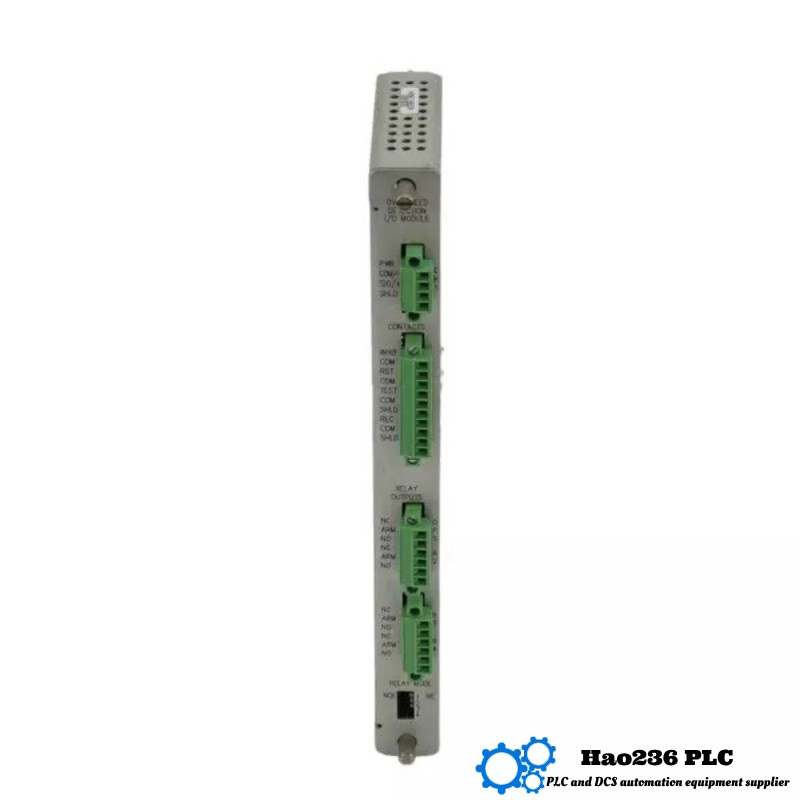
A1: The 3500/33 monitors vibration, displacement, and temperature in critical rotating machinery such as turbines, motors, compressors, and pumps.
Q2: How does the 3500/33 improve maintenance practices?
A2: The 3500/33 enables predictive maintenance by alerting operators to potential issues early, helping prevent unplanned downtime and reducing maintenance costs.
Q3: What communication protocols are supported by the 3500/33?
A3: The system supports Modbus, Profibus, and Ethernet, ensuring seamless integration with a variety of industrial control systems.
Q4: What is the environmental rating of the 3500/33?
A4: The 3500/33 has an IP65 rating, which means it is resistant to dust and water, making it suitable for use in harsh industrial environments.
Q5: Can the 3500/33 be integrated into existing systems?
A5: Yes, the 3500/33 can easily be integrated into existing control systems thanks to its support for industry-standard protocols like Modbus and Profibus.
Q6: What is the operating temperature range of the 3500/33?
A6: The 3500/33 operates within a temperature range of -20°C to 60°C, which is suitable for most industrial environments.
Q7: Is the 3500/33 suitable for monitoring multiple machines?
A7: Yes, the system is highly scalable and can be configured to monitor multiple machines across large industrial facilities.
Q8: How does the 3500/33 contribute to reducing downtime?
A8: By detecting potential issues early, the 3500/33 helps operators schedule maintenance before a failure occurs, reducing unexpected downtime and minimizing costly repairs.
Q9: Can the 3500/33 be used in extreme environments?
A9: Yes, the 3500/33 is designed to withstand harsh industrial environments. With an IP65 rating and an operating temperature range of -20°C to 60°C, it can function reliably in extreme conditions.
Q10: How does the 3500/33 help improve equipment life?
A10: The system provides real-time monitoring of critical parameters, which helps detect wear and tear before it leads to failure, thus extending the life of expensive machinery by enabling timely interventions.