8. FAQs (10 Questions & Answers, QA Format)
Q1: What input signals does the 3500/62 163179‑03 module accept?
A: It accepts both voltage signals in the range ‑10 VDC to +10 VDC, and current loop signals of 4‑20 mA, depending on the I/O option chosen.
Q2: How many channels are available in this module?
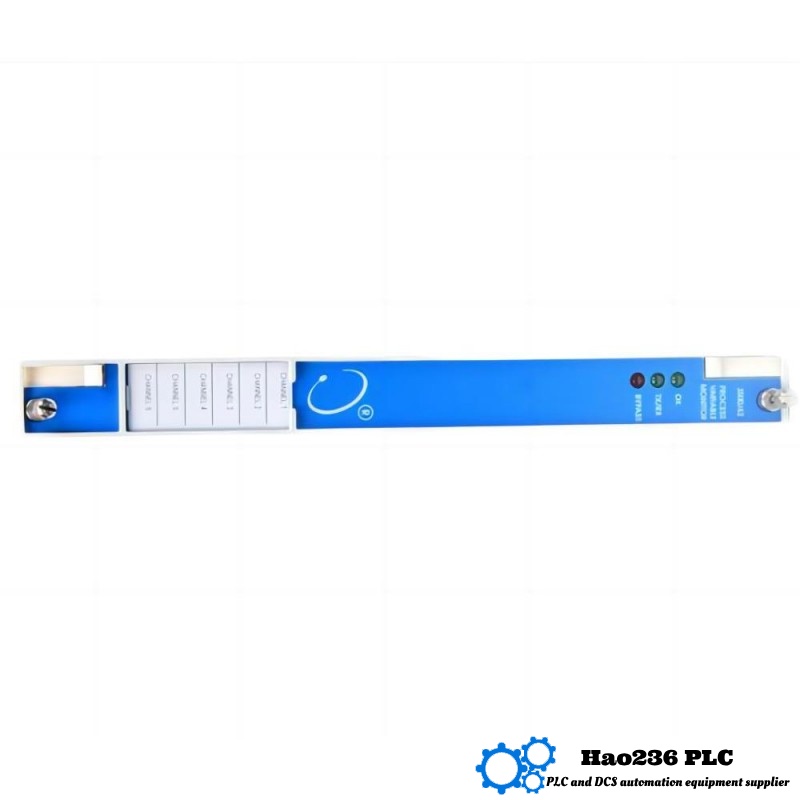
A: It provides 6 independent process variable channels.
Q3: What are its physical dimensions and weight?
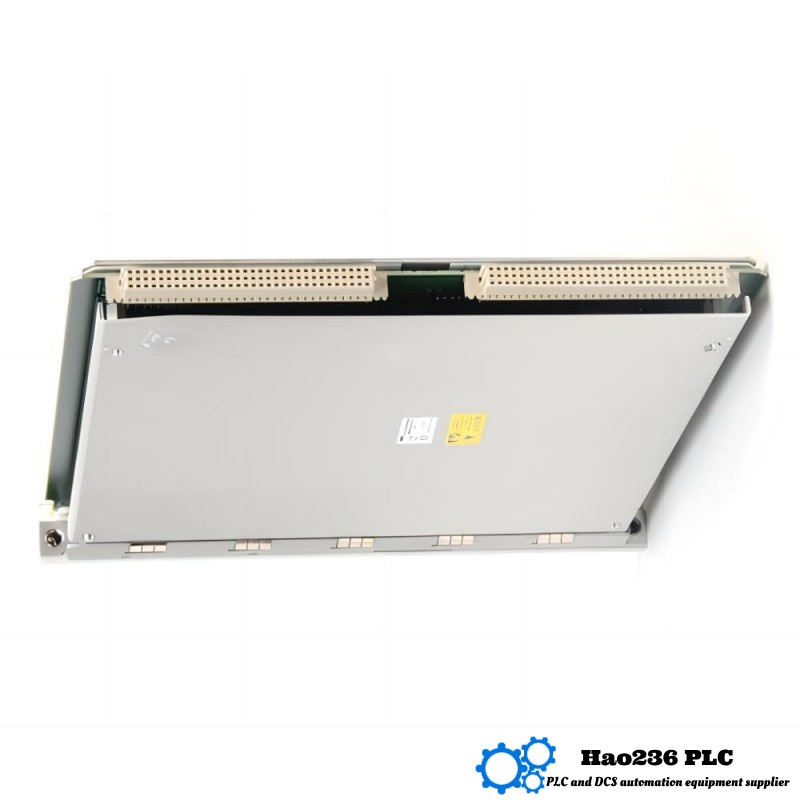
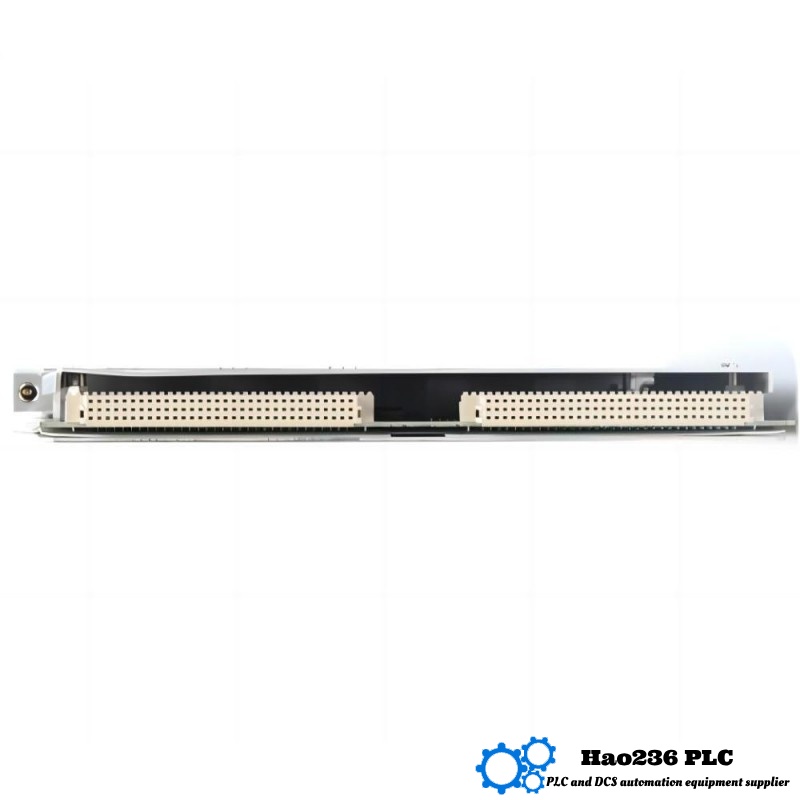
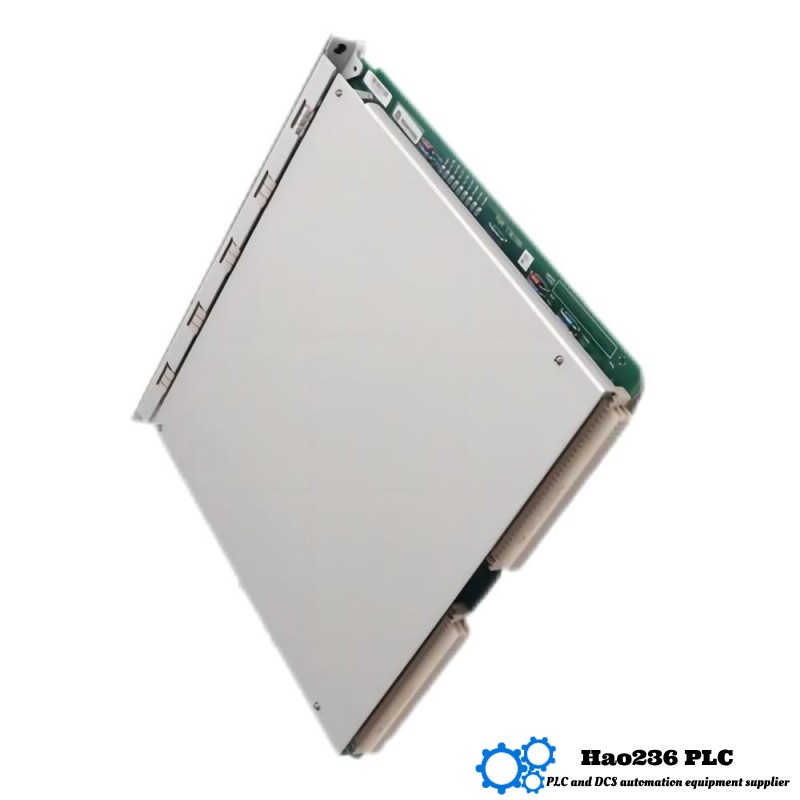
A: The Monitor Module (when fully assembled) is about 241.3 mm × 24.4 mm × 241.8 mm, weight approximately 0.82 kg. The I/O sub‑modules (non‑barrier) are smaller and lighter (~0.20 kg), and with barrier options they weigh ~0.46 kg.
Q4: What is the operating temperature range?
A: Typically ‑30 °C to +65 °C when using internal or external termination I/O. If internal barrier I/O is used, the lower limit may be closer to 0 °C.
Q5: What accuracy can be expected on alarm setpoints?
A: The alarms are typically accurate within ±0.13% of full‑scale for many configurations. Depending on sensor, input type, and full‑scale setting, expected accuracy is good (often around ±0.3% or better in many real‑world setups).
Q6: Does this module provide power for loop‑powered transmitters?
A: Yes, in versions with internal barrier I/O, there is provision for a +24 VDC transmitter power supply (fused) to drive the 4‑20 mA devices.
Q7: What safety or isolation features does it have?
A: Isolation is provided in the isolated I/O variant (typically 500 V isolation). The barrier option allows for intrinsically safe configurations. Besides, external terminations help in physically separating field wiring.
Q8: How are alarm thresholds configured?
A: The user can set both under (low) and over (high) alarm thresholds for each of the 6 channels using configuration software for the 3500 rack. The thresholds are proportional to full‑scale, usually from 0 to 100% of full‑scale, subject to sensor and module limits.
Q9: Can this module be used in a redundant safety configuration?
A: Yes. It supports arrangements such as Triple Modular Redundancy (TMR) for critical machinery protection, which helps avoid single‑point failures.
Q10: What should be considered for wiring and terminations?
A: You must choose between internal vs. external terminations, and possibly barrier or isolated I/O depending on environment (hazardous zones, safety requirements). Also, proper wiring practice (shielding, cable lengths, grounding) is important to maintain signal integrity.
Related Products
Copyright @ 2026 Automations
XML|Links:
No:77501