FAQs (10 Questions & Answers)
Here are ten likely questions you might get about this module, with clear answers. Each ends with a blank line.
Q1: What is the function of “internal terminations” in 3500/77M 143729‑01?
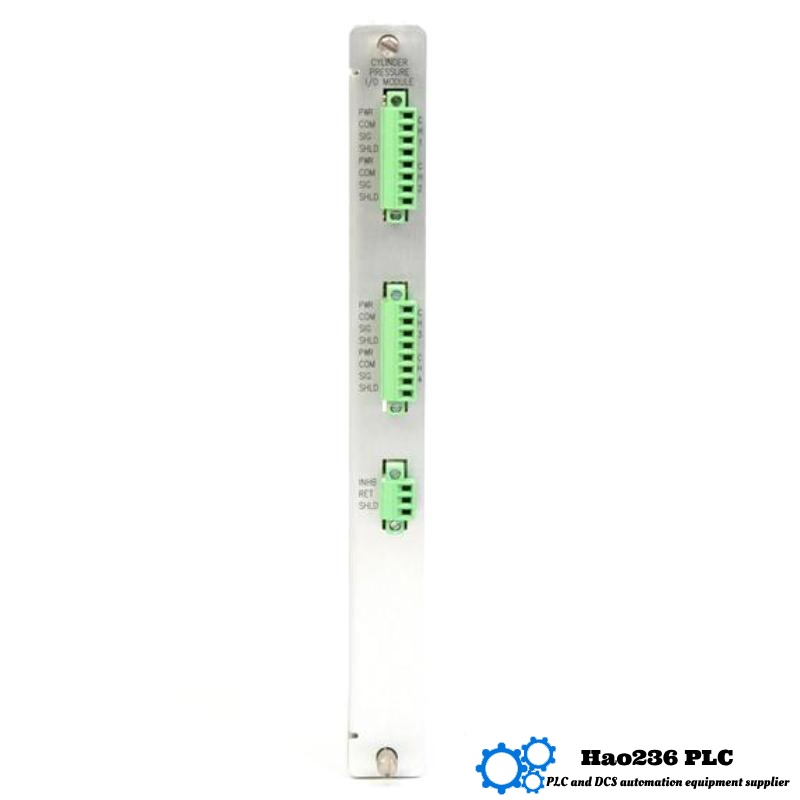
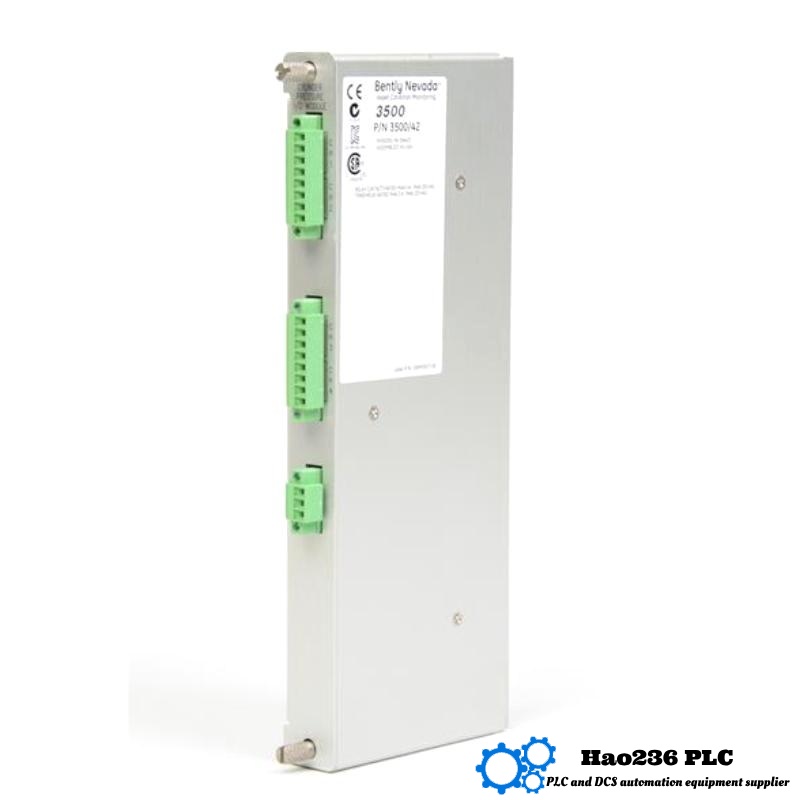
A1: Internal terminations mean the wiring connections (terminals) for the input from pressure transducers are inside the module or built into its rear connectors, rather than requiring separate external termination blocks. This simplifies wiring and reduces external components.
Q2: Can this module handle low machine speed (RPM)?
A2: The standard version is designed to operate at typical compressor speeds. If machine speed is slower than the standard limit, a modified version (or special change) may be needed to ensure accurate pressure waveform capture.
Q3: How many “measured variables” does each channel provide?
A3: Each channel can provide up to eight measured variable values: five related to a single cylinder/chamber (Discharge Pressure, Suction Pressure, Maximum Pressure, Minimum Pressure, Compression Ratio) plus three that combine channel values and configured mechanical parameters (e.g. Peak Rod Compression, Peak Rod Tension, Degree of Rod Reversal).
Q4: How precise / accurate is the pressure measurement?
A4: Accuracy depends on the pressure transducer used, but with approved transducers, the module supports high precision (e.g. ±0.25 % full scale in some versions).
Q5: What happens when pressure exceeds the “danger” setpoint?
A5: When a configured variable exceeds its danger threshold, the module triggers an alarm via the 3500 system. This can be used to initiate shutdown or other protective actions to prevent damage.
Q6: Is the module compatible with any pressure transducer?
A6: It must be an approved or compatible pressure transducer. Output type, sensitivity, range, and wiring must match the module’s input requirements to ensure correct measurement and avoid signal drift or errors.
Q7: What ambient conditions affect module performance?
A7: Ambient temperature extremes, humidity (especially condensation), vibration, dust, electrical noise can all affect performance. The module is built for industrial use, but staying within the specified operating temperature and environmental conditions is important.
Q8: How is maintenance done? Does it require calibration?
A8: Yes, periodic maintenance and calibration are needed. Calibration of the pressure transducers themselves, verifying alarm setpoints, checking wiring connections, inspecting module integrity, ensuring firmware/software are up to date.
Q9: What is the expected lifespan?
A9: With proper installation, environment, and maintenance, modules often last many years (5‑10+), though components like transducers may require replacement sooner depending on wear or exposure.
Q10: Can this module be used in hazardous / potentially explosive atmospheres?
A10: Only if its variant is certified for such environments (e.g. ATEX / IECEx or other explosion‑proof / intrinsically safe classification). Standard versions may not have those certifications, so a certified variant or proper enclosure may be required.
Related Products
Copyright @ 2026 Automations
XML|Links:
No:77501