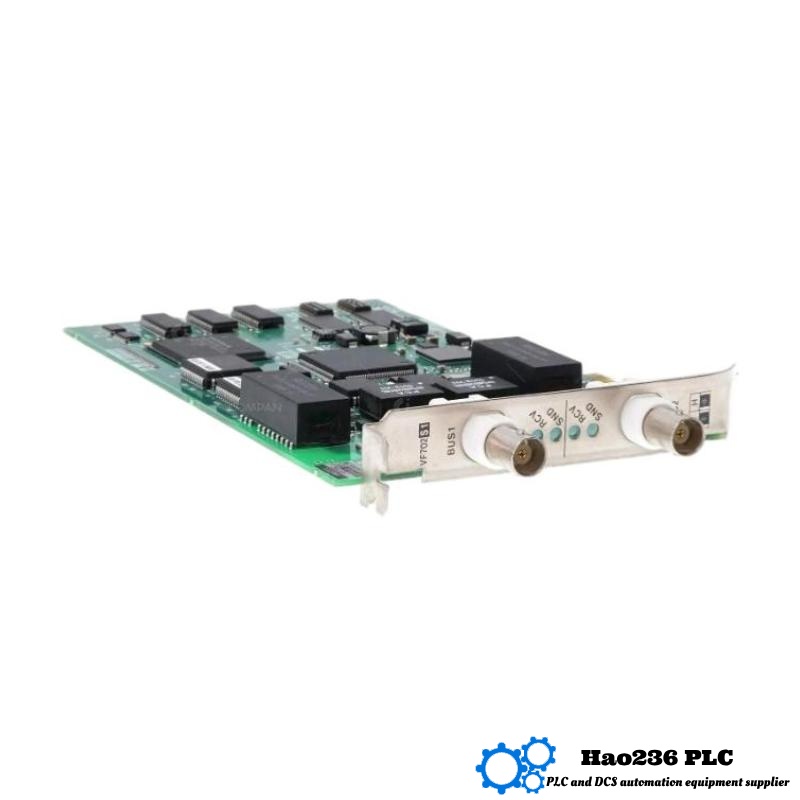
FAQ (10 Questions & Answers)
Q1: What does VF702 do in a control system?
A1: It acts as a bridge between a PCI‑Express based control/processor board and a legacy coaxial 10BASE‑2 control bus, enabling data exchange and communication over the coax bus.
Q2: What cable type and maximum length does it support?
A2: It supports coaxial cable per 10BASE‑2 standard (with T‑type / BNC connectors), up to about 185 meters.
Q3: What power voltage does the card require?
A3: 3.3 V DC with a tolerance (±9%).
Q4: How much current does VF702 draw?
A4: Up to about 2.4 A.
Q5: What are the physical dimensions and mass of the module?
A5: Approximately 22 mm width × 126.5 mm height × 193.54 mm depth, and weighing about 0.15 kg (excluding certain connectors).
Q6: What slot types can this card be installed in?
A6: It can be used in PCI‑Express slots of width ×1 up through ×16 (physically compatible), but not in standard PCI slots.
Q7: What are the environmental operating conditions?
A7: It operates typically between ‑20 °C and +70 °C, meeting ambient industrial environment specs, and has EMC compliance via CE, C‑Tick etc.
Q8: What are the indicator LEDs for?
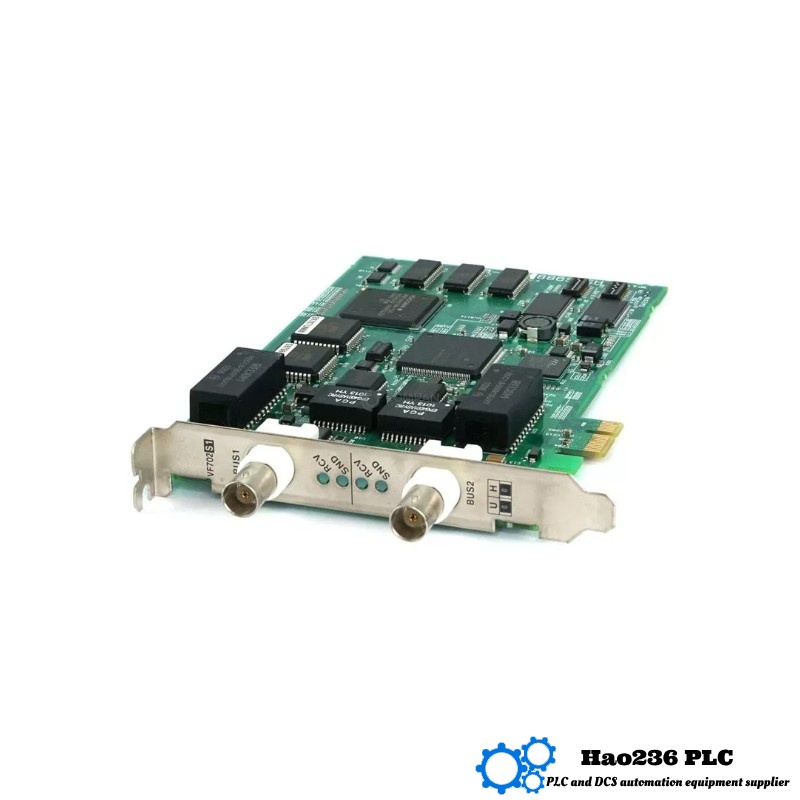
A8: Indicators such as “RCV” show reception activity on the control bus; “SND” show transmission / send activity, assisting diagnostics.
Q9: Is VF702 used for safety‑critical functions?
A9: It is an interface card; whether it forms part of a safety‑certified loop depends on the overall system design. It supports necessary standards for industrial automation, but its safety role must be defined in system context.
Q10: Can VF702 be used with long‑distance coaxial bus segments?
A10: Yes, up to ~185 m under proper 10BASE‑2 coaxial cable conditions with correct connectors. Beyond that, signal integrity may degrade.
Related Products
Copyright @ 2026 Automations
XML|Links:
No:77501