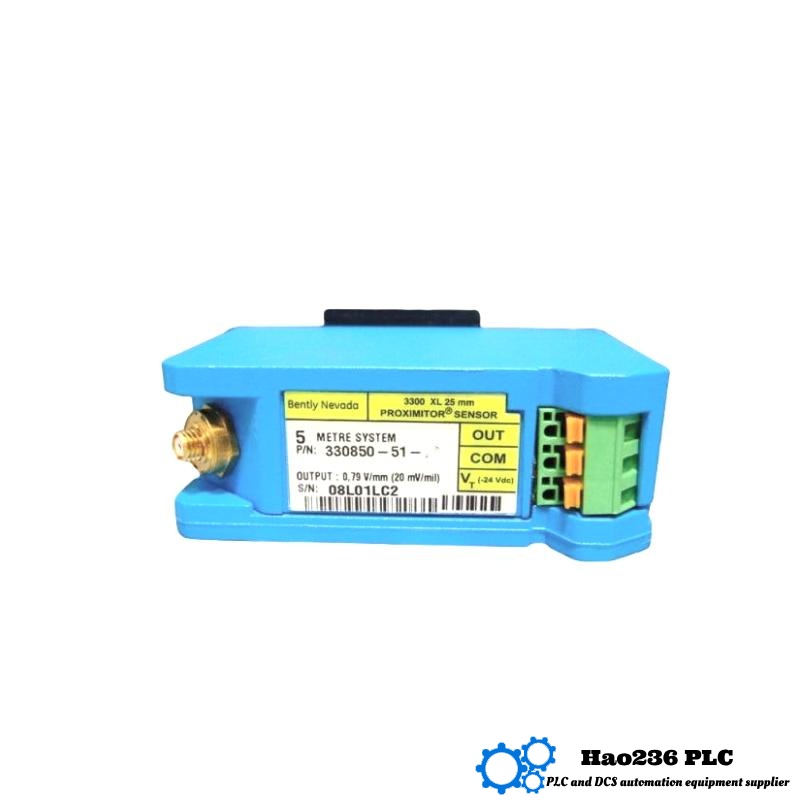
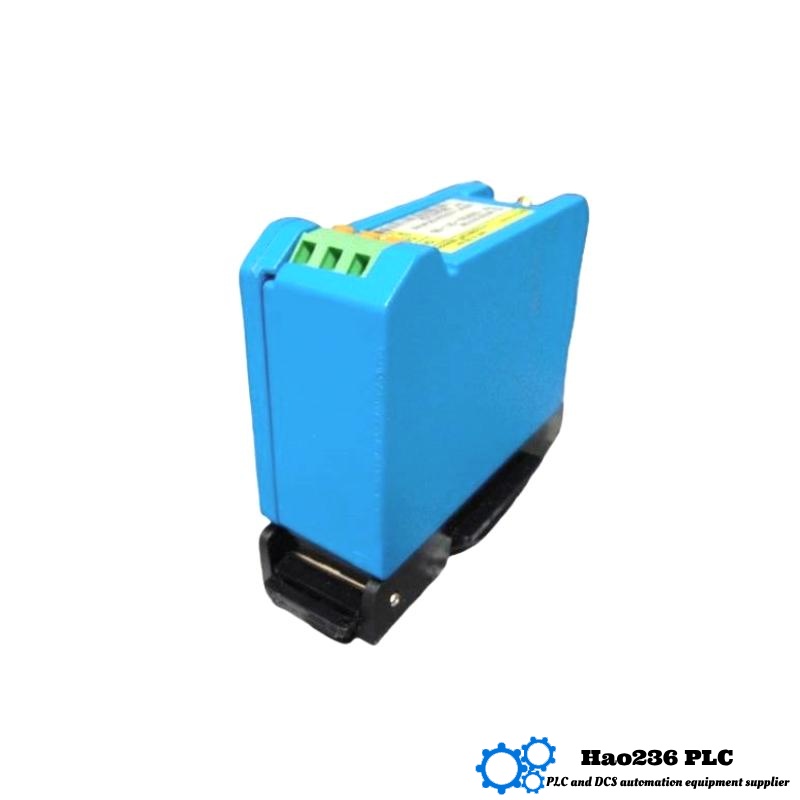
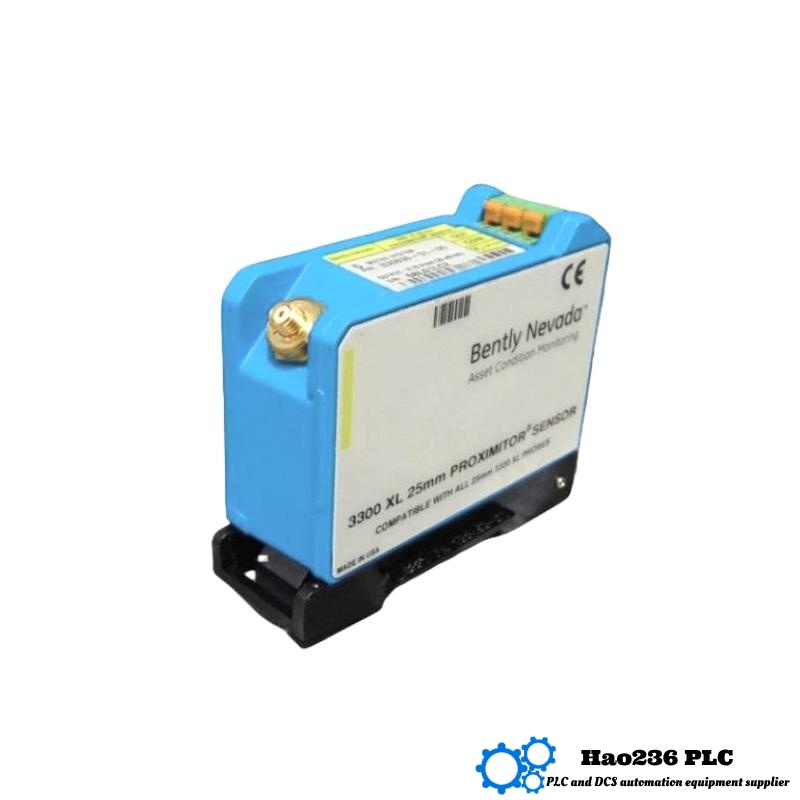
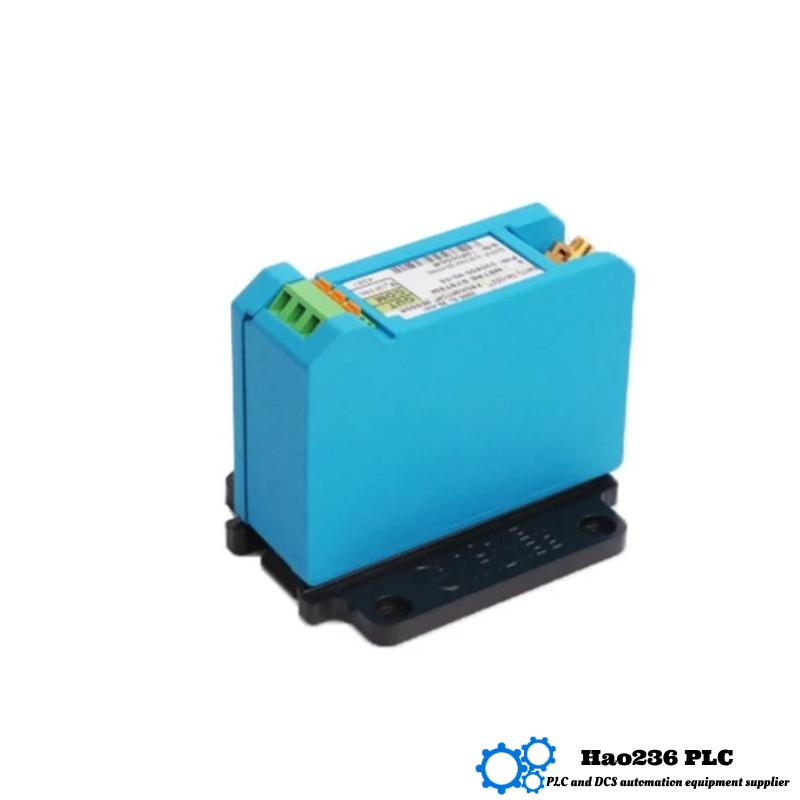
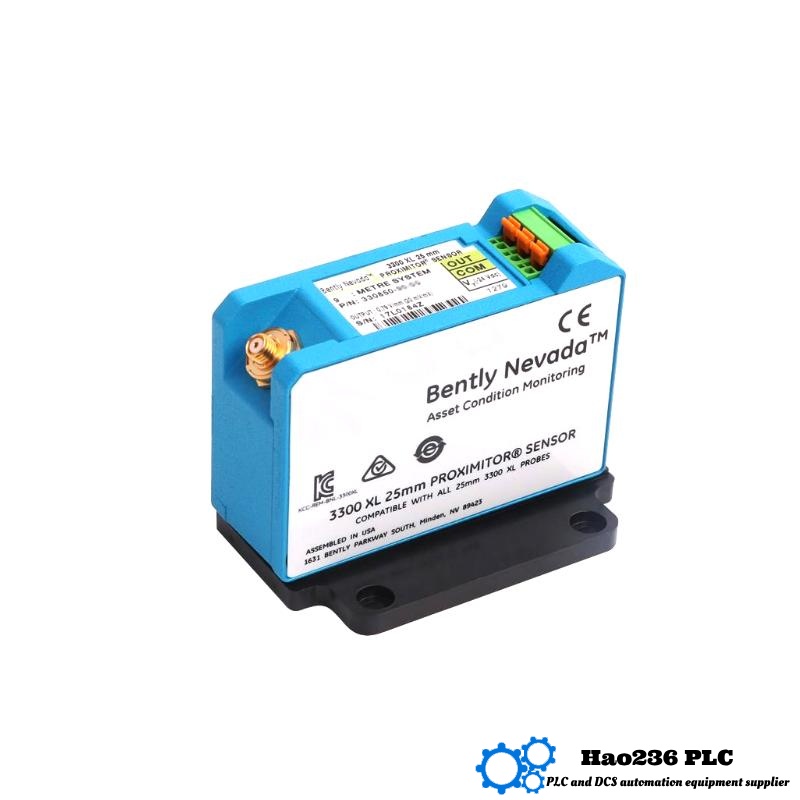
Q1: What components are needed for this sensor to function properly?
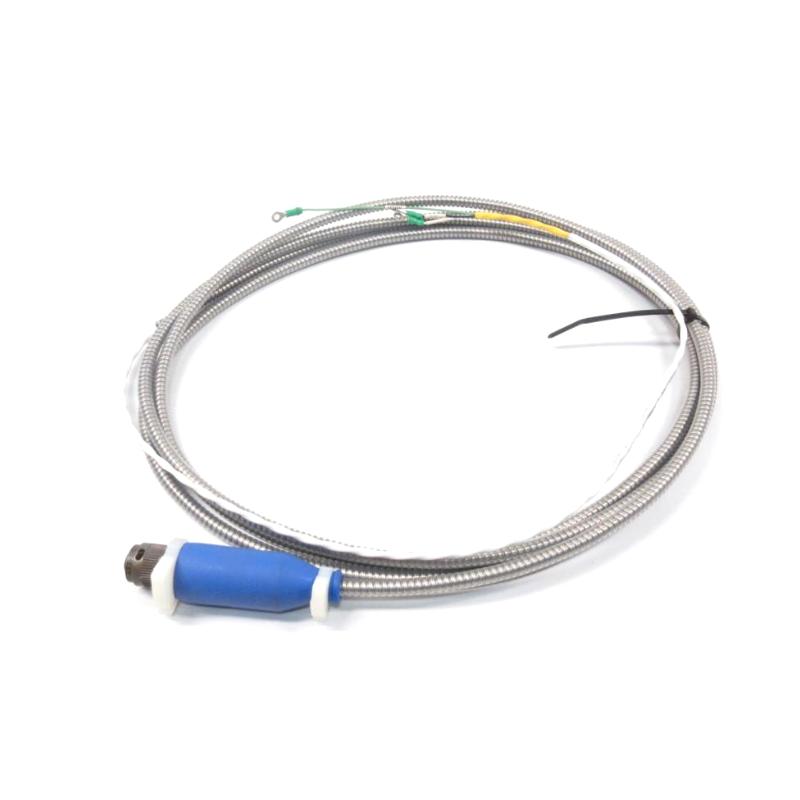
A1: It requires a compatible 3300 XL 25 mm proximity probe and extension cable. Together with the proximitor sensor, they form a complete measuring chain.
Q2: Can this model replace older 3300 systems?
A2: Yes, the 3300 XL series is designed with backward compatibility in mind, allowing for integration or upgrades with older systems. Always verify voltage, cable length, and connector type before replacement.
Q3: Is this sensor suitable for EMI/RFI-heavy environments?
A3: Absolutely. It includes enhanced electromagnetic immunity and complies with international EMC standards, making it suitable for high-noise industrial settings.
Q4: What voltage does it need to operate?
A4: It requires –17.5 to –26 VDC without isolation and –23 to –26 VDC with isolation components. Voltage outside this range may affect performance or linearity.
Q5: Can it work under extreme temperature conditions?
A5: Yes. The operating temperature range is –35°C to +85°C, with storage capability down to –51°C and up to +100°C.
Q6: Does shaft material affect measurement accuracy?
A6: Yes. The proximity system is calibrated for standard materials like AISI 4140. For other materials (e.g., stainless steel), correction factors should be applied.
Q7: What’s the recommended gap between the probe and shaft?
A7: Maintain the probe within the specified linear range (typically 0.25 to 12.5 mm) and avoid contact. Installation clearance should factor in thermal expansion and shaft movement.
Q8: What’s required during maintenance or recalibration?
A8: Disconnect power, use the proper calibration tools, and document the settings. Ensure compatibility when replacing cables or probes and check signal integrity post-calibration.
Q9: How can I handle longer cable runs or distance?
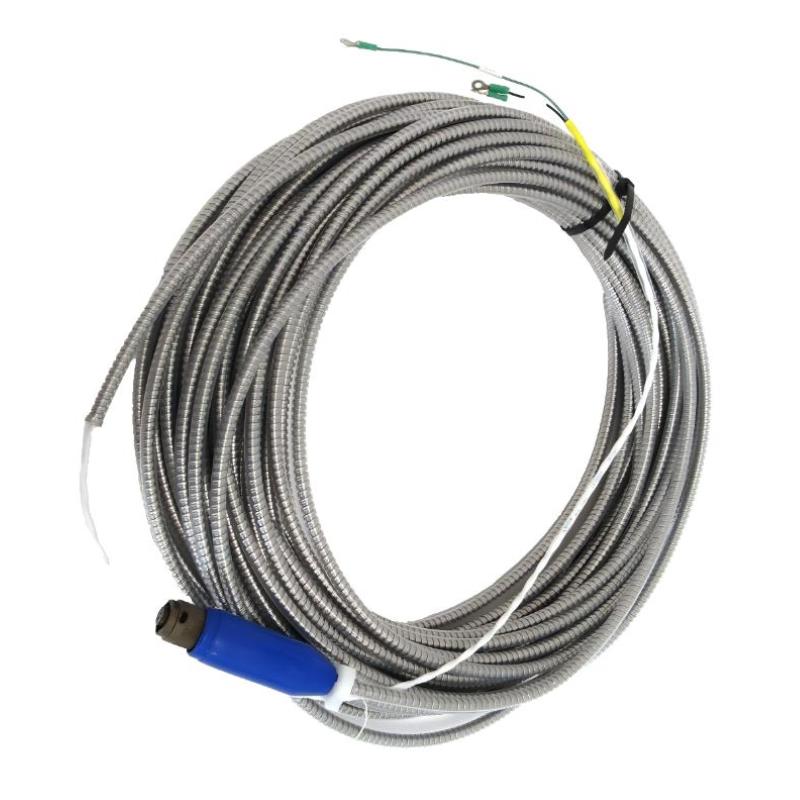
A9: Consider models with longer system lengths (e.g., 9 m options like 330850-90-05) and ensure shielded cables are used to maintain signal quality over distance.
Q10: How long can this device last in the field?
A10: With proper installation and routine inspections, these sensors can last for 5–10+ years. Lifespan depends on environment, vibration levels, and electrical stress.
Related Products
Copyright @ 2026 Automations
XML|Links:
No:77501