FAQ (10 Questions & Answers)
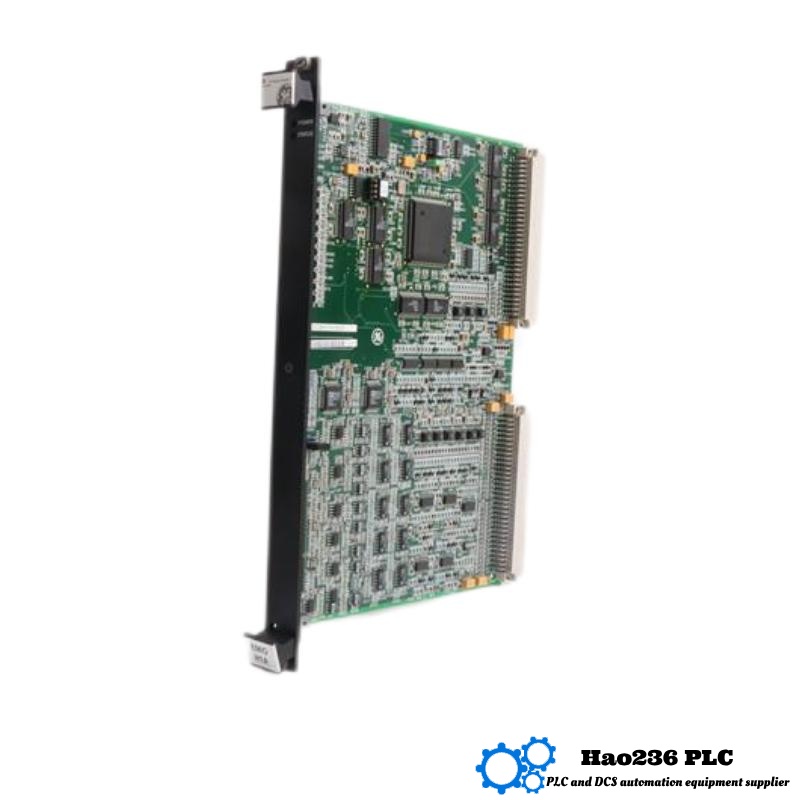
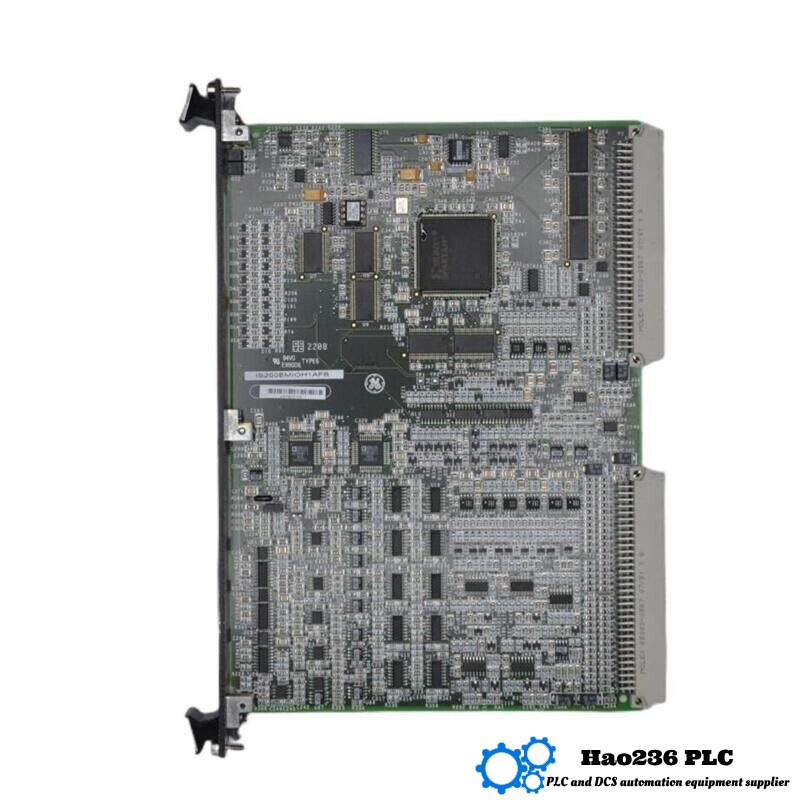
Here are ten commonly asked questions about IS200EMIOH1A, with straightforward, field‑practical answers.
QA1
Q: What is the board’s physical size and rack‑slot requirement?
A: It occupies a single slot, double‑height VME/backplane board. Physical dimensions are about 9.25 inches × 6.5 inches (≈ 235 mm × 165 mm) and weighs about 2 lbs (≈ 0.9 kg).
QA2
Q: What signals does the EMIO board manage?
A: It manages contact inputs, PT (voltage transformer) and CT (current transformer) signals, relay driver outputs (pilot trip relays, output relays), and it also sends gate pulses via the backplane to subsequent modules (e.g. ESEL, EGPA).
QA3
Q: What is the supply voltage required?
A: The input supply is nominally 24 V DC, which powers the board’s logic and driver circuits.
QA4
Q: What is the operating temperature range?
A: Typically, the board can operate from about −40 °C to +85 °C, depending on manufacturer / specific version, ensuring it can handle demanding industrial environments.
QA5
Q: How does the EMIO board interact with redundancy or multiple controllers?
A: In redundant or fault‑tolerant setups, multiple controllers / boards operate in parallel or in backup mode. EMIO receives and sends signals through the backplane, and its status is managed by master/slave or redundant processor structure. Any failure in one board can be voted out or substituted by another in a redundant configuration.
QA6
Q: What diagnostic indicators are available on the board?
A: There are typically two LEDs on the front panel: one for Power (to show whether the board is powered correctly) and another for Status (to show operating condition / fault / OK).
QA7
Q: How much power does it consume?
A: Power draw is moderate; approximately 5–10 W depending on signal load and function.
QA8
Q: What happens if a PT or CT input fails or is open circuit?
A: The EMIO board may detect abnormal signal levels, the control system may note the signal failure, and based on system configuration, may generate alarms, default to safe state, or disable certain functions, depending on logic in controller and redundancy.
QA9
Q: Is the board backwards compatible or replaceable without extensive re‑wiring?
A: Generally yes: since the board fits the standard backplane slot and is designed for the EX2100 / Mark VI system suite, its connectors and layout follow standard form factor; replacing a failed board often requires minimal rewiring as long as the other terminal boards and system are intact.
QA10
Q: What maintenance or handling precautions are needed?
A: Before handling: ensure power is off and backplane is de‑energized; use anti‑static precautions; ensure correct seating in slot; verify signal connectors and wiring are secure; check environmental conditions (temperature, humidity) are within specification; monitor LEDs after power‑up to verify correct operation.
Related Products
Copyright @ 2026 Automations
XML|Links:
No:77501