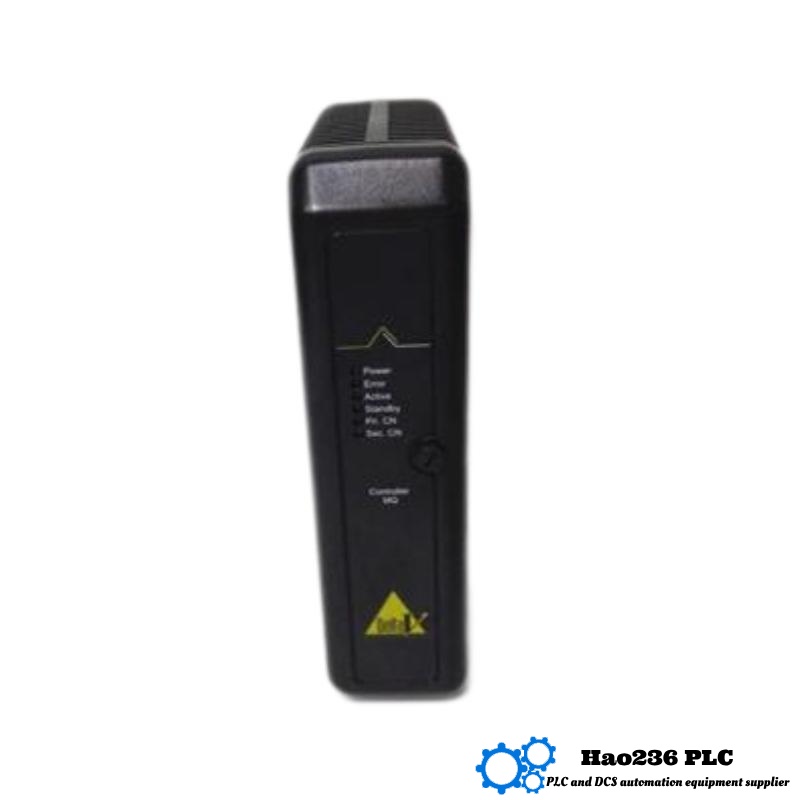
Q1: What is the primary role of VE3008 in a DeltaV system?
A1: The VE3008 acts as an MQ Controller in the DeltaV DCS architecture. It executes control strategies, manages I/O cards, handles communications, timestamping, alarms, and trends across its subsystem.
Q2: How is the VE3008 powered?
A2: It is powered via the system’s power/controller carrier (two-wide slot), drawing from the Control Bus power infrastructure in the DeltaV system.
Q3: What is the memory capacity and power consumption?
A3: It has 48 MB of user memory and typical power dissipation is ~5 W (maximum 7 W).
Q4: Can the VE3008 run in a redundant configuration?
A4: Yes. It supports redundant control network interfaces, and the architecture supports redundant controller setups for high availability.
Q5: What environment does VE3008 support?
A5: It operates in –40 °C to +70 °C ambient temperature and can be stored between –40 °C to +85 °C, with 5–95 % non‑condensing humidity.
Q6: What are its physical dimensions and weight?
A6: One listing gives ~225 mm × 144 mm × 96 mm for dimensions and shipping weight ~1.5 kg; other listings note 2.5 kg as installed weight.
Q7: How fast does it execute control loops?
A7: It supports executing control strategies at scan intervals down to approximately 100 ms.
Q8: What happens during a power failure?
A8: It supports a cold restart mechanism: upon power restoration, it recovers control strategy and state from stored memory and resumes normal operation.
Q9: Does VE3008 support HART data passing?
A9: Yes — it can pass smart HART device information from field instruments up to the control network or workstation nodes.
Q10: Is this controller suitable for hazardous area use?
A10: Yes — certain variants of VE3008 are certified for Zone 2 hazardous area operation, making them suitable for environments with occasional flammable gas presence.
Related Products
Copyright @ 2026 Automations
XML|Links:
No:77501