FAQ (Frequently Asked Questions)
Q1: What is the primary purpose of the A6500‑RC module?
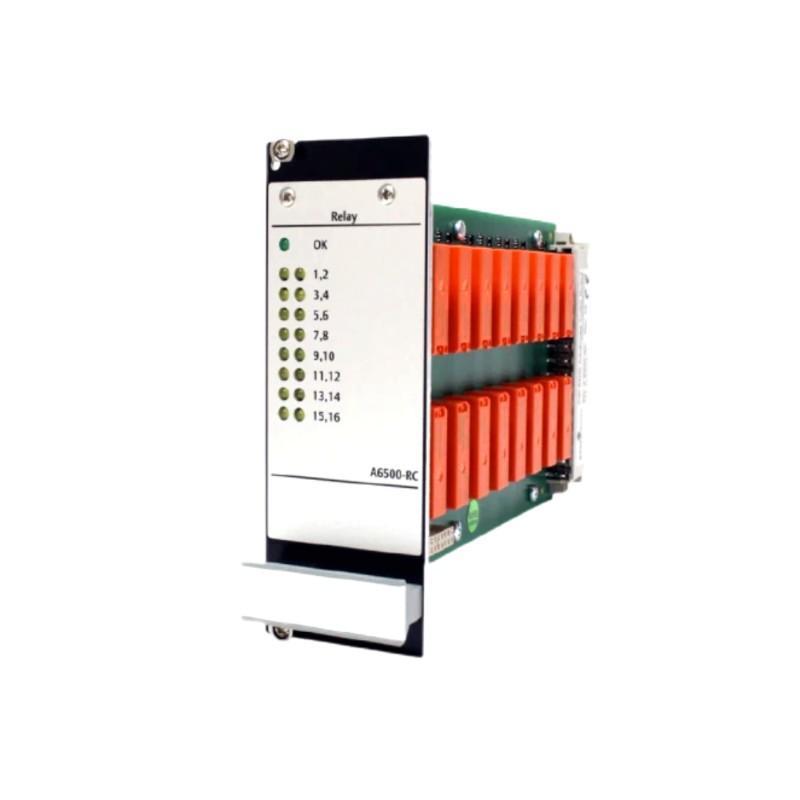
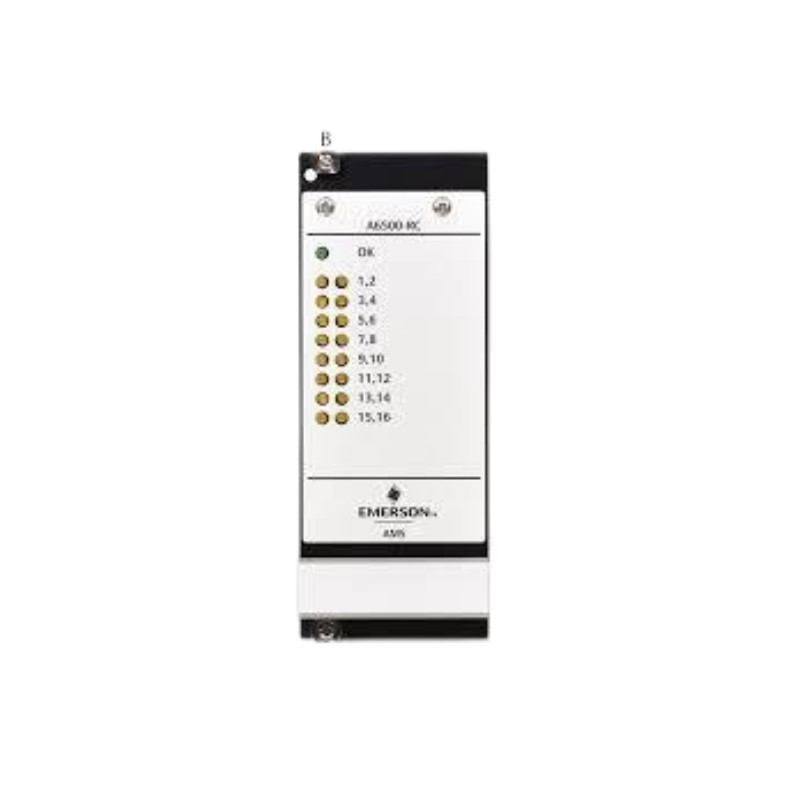
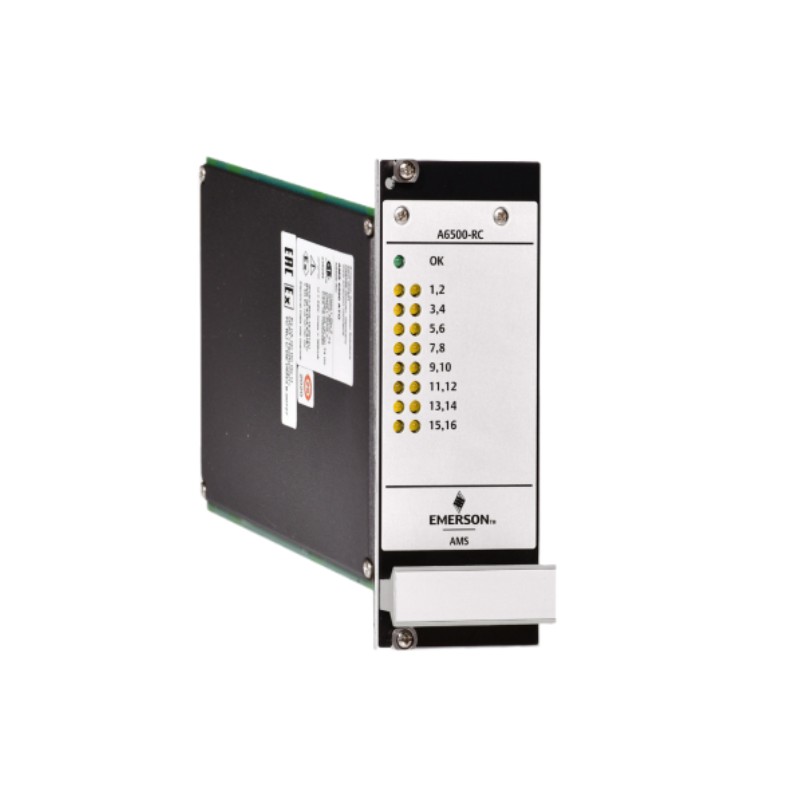
A1: It serves as a 16‑channel relay‑output interface card in a machinery‑health protection system, receiving logic inputs (clear/alert/alarm signals) and driving relay outputs according to configured logic networks.
Q2: How many digital input channels does the A6500‑RC support?
A2: It supports up to 66 digital input channels for control logic signals.
Q3: How many relay output channels are provided?
A3: There are 16 SPDT relay output channels provided by the module.
Q4: What is the maximum output load for each relay?
A4: The relay output can handle up to 2 A at 32 V DC or up to 2 A at 48 V AC in the AC1 rating.
Q5: What is the operating temperature range of this module?
A5: The module operates reliably between –20 °C and +70 °C; it can be stored between –40 °C and +85 °C.
Q6: What form factor and mounting is used?
A6: The module is a 3U‑height, 2‑slot plug‑in card designed for the A6500‑SR rack.
Q7: What is the approximate weight of the module?
A7: The net weight is approximately 0.32 kg; the gross (packaged) weight is around 0.45 kg.
Q8: Is the module hot‑swappable?
A8: Yes, the module supports hot‑swapping in the rack architecture, enabling minimal downtime for replacement.
Q9: What standards does this module comply with?
A9: It complies with API 670 standards for machinery protection systems, as well as industrial vibration/shock and EMC/EMI standards (e.g., IEC 60068 series, EN50081‑1 / EN50082‑2).
Q10: Can the logic networks be configured by the user?
A10: Yes, the module supports up to 16 configurable logic networks using Boolean logic operations and configurable time delays, allowing custom alarm/trip logic to be built by the user.
Related Products
Copyright @ 2026 Automations
XML|Links:
No:77501