FAQ (10 Questions & Answers)
Q1: What is the primary function of the IS220PTURH1B?
A1: Its primary function is to act as a primary I/O trip pack module for turbine systems, managing protection logic, discrete inputs/outputs, and communication in turbine control systems.
Q2: What supply voltage does the module use?
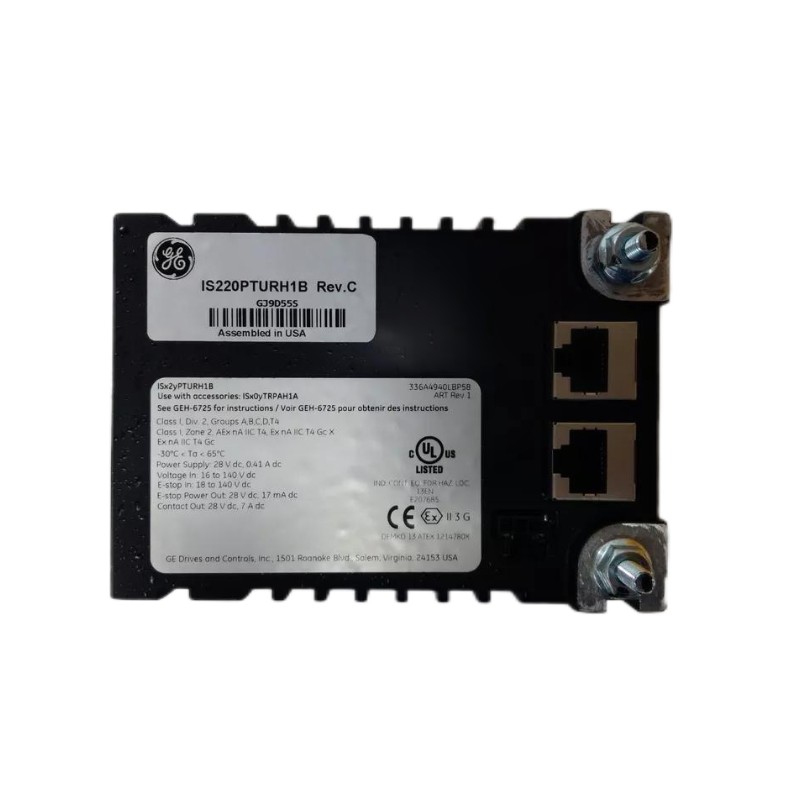
A2: The module is supplied via a nominal ~27.4-28.6 V DC system.
Q3: What are its physical dimensions and weight?
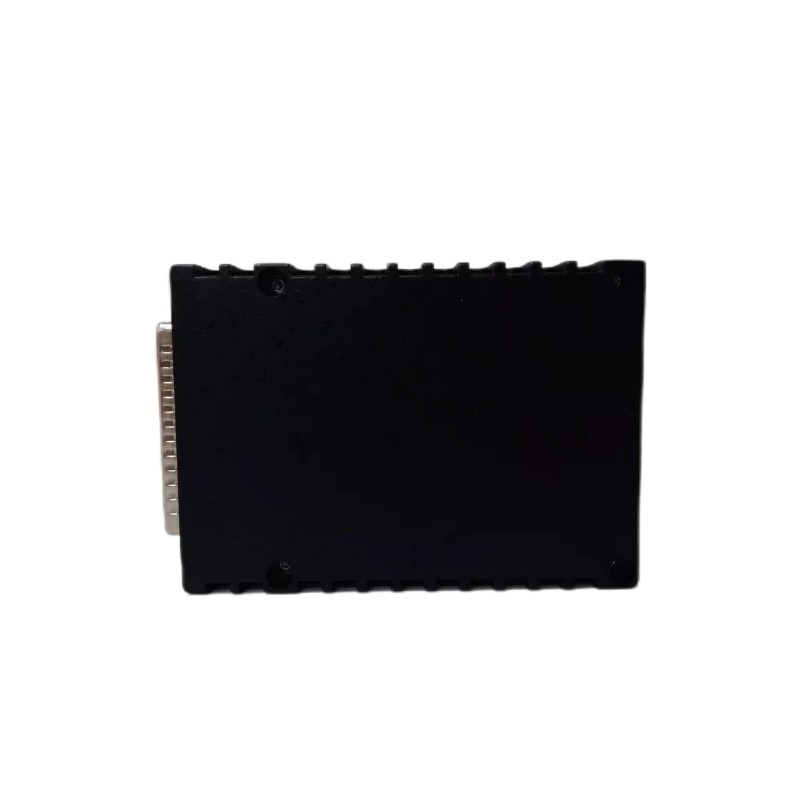
A3: Approximate dimensions are 241 mm × 194 mm × 152 mm, and weight is around 3.0 kg.
Q4: Does the module support redundant configurations?
A4: Yes. It supports both simplex and triple modular redundant (TMR) configurations depending on system architecture.
Q5: What communications ports are available?
A5: The IS220PTURH1B has dual Ethernet RJ-45 ports (10/100 Mbps) enabling redundant network links.
Q6: Which types of applications is this module suited for?
A6: It is suited for industrial power generation, gas/steam turbines, oil & gas platforms, and any application requiring turbine trip logic and protection I/O.
Q7: What diagnostics or status indication features does it have?
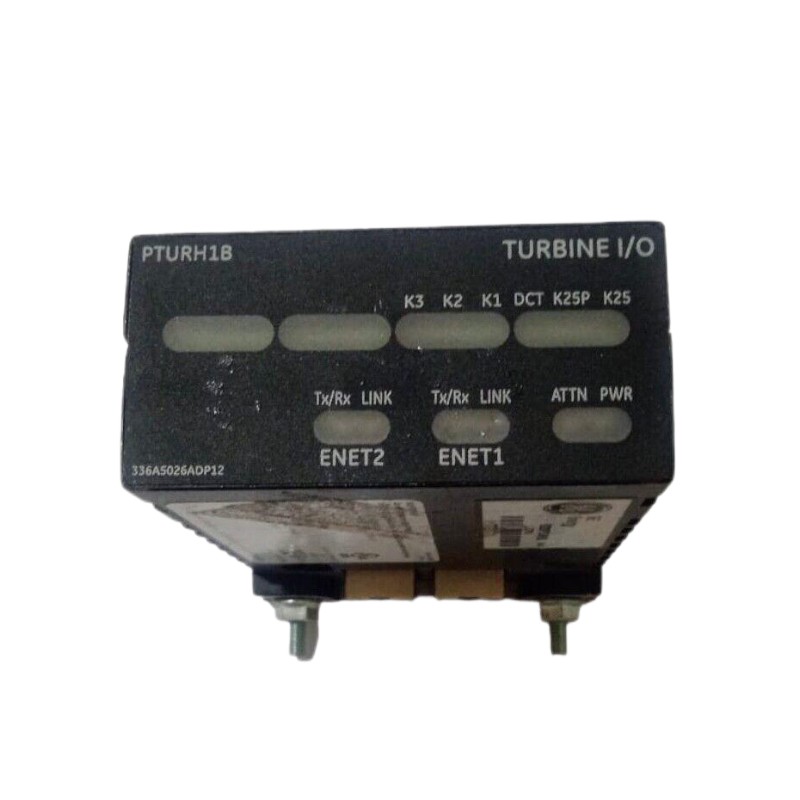
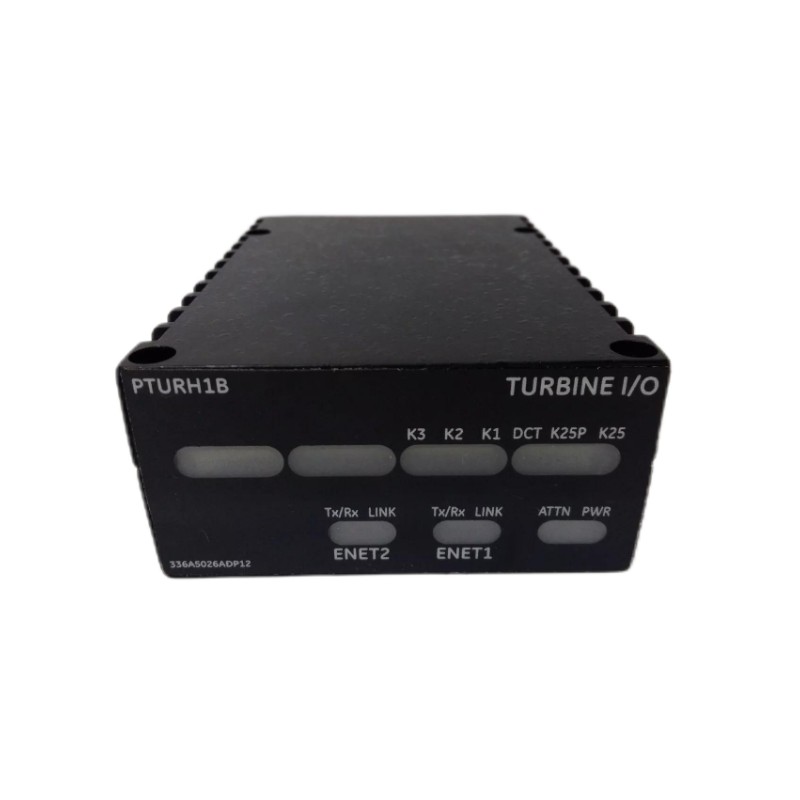
A7: It includes built-in self-test functionality and front-panel LEDs for power, communication channels (ENET1/2), turbine I/O status, and fault indication.
Q8: What environmental conditions can it handle?
A8: It is designed for industrial environments with operating temperature ranges from approximately –10 °C to +70 °C, and in some variants wider ranges.
Q9: What is the difference between IS220PTURH1B and its predecessor IS220PTURH1A?
A9: The “B” revision typically indicates enhanced features, improved diagnostics, updated firmware/hardware, and possibly broader environmental ratings compared to the “A” revision.
Q10: How does this module improve system reliability for turbine control?
A10: By providing dedicated primary trip logic, support for TMR architectures, redundant network links, and robust environmental tolerance, it enhances protection reliability and reduces risk of turbine downtimes.
Related Products
Copyright @ 2026 Automations
XML|Links:
No:77501