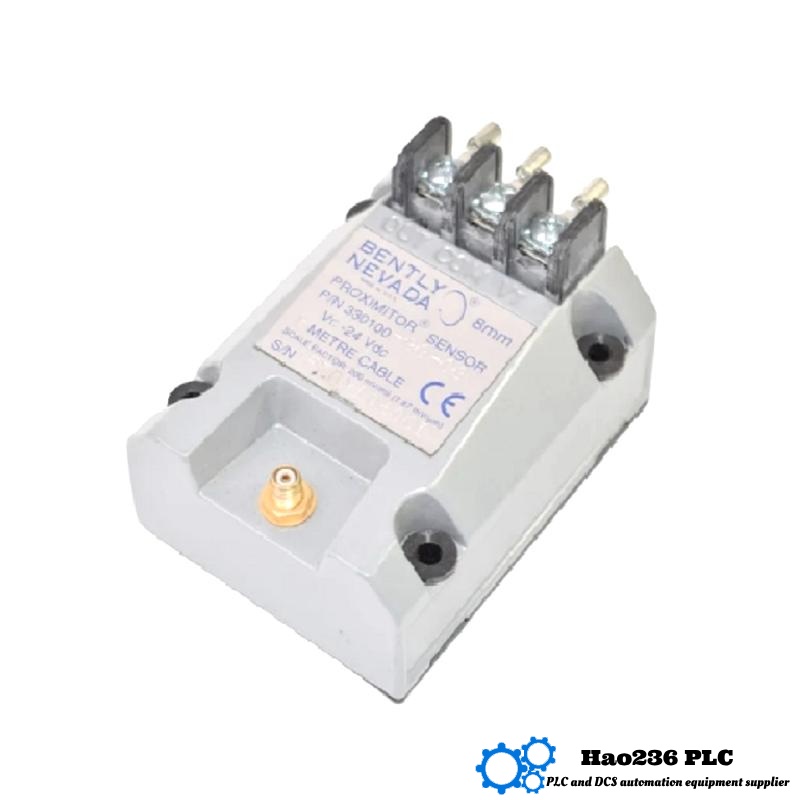
❓ Frequently Asked Questions (FAQ)
Q1: What is the primary function of the 330100‑90‑02 module?
A1: Its role is to condition the raw output from an eddy-current probe into a stable, linear signal that can be interpreted by monitoring or protection systems.
Q2: What does “90” in the model name refer to?
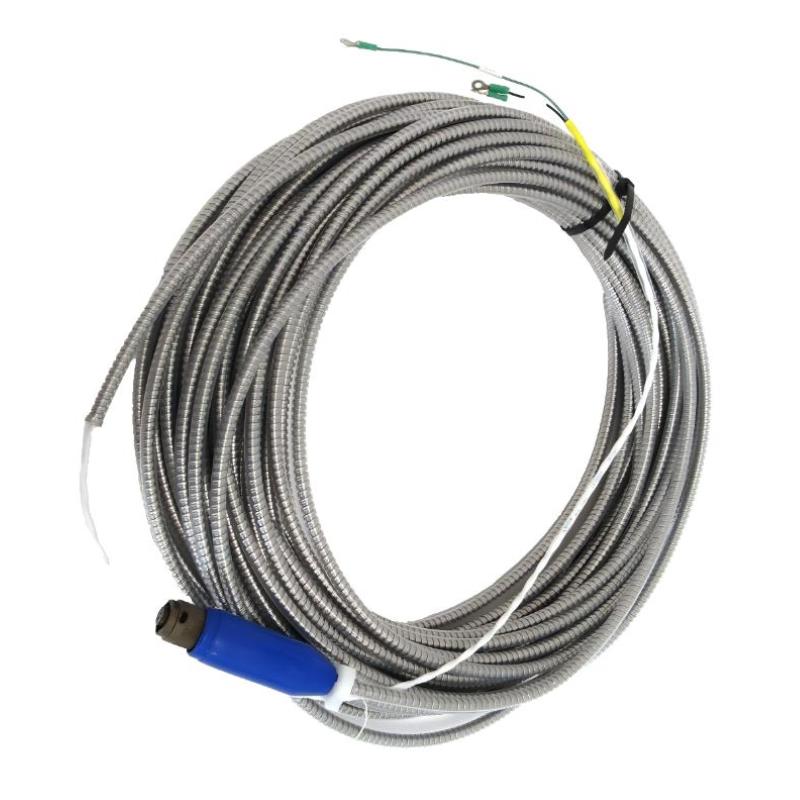
A2: It typically implies the nominal assembly or cable length (e.g., around 9.0 meters) or variant designation in the 330100 family.
Q3: Why does the suffix “02” appear in the part number?
A3: The “02” usually designates a variant with specific compliance, connector options, or approvals compared to base variants.
Q4: Can this module operate in wet or humid environments?
A4: Yes — it is designed to tolerate up to 100% relative humidity, provided that connectors are properly sealed.
Q5: What is the usual operating voltage for this module?
A5: It typically operates between –17.5 Vdc and –26 Vdc, drawing up to ~12 mA of current.
Q6: Is the module housing robust enough for industrial use?
A6: Yes — it is enclosed in rugged aluminum or equivalent material to withstand vibration, temperature stress, and mechanical shock.
Q7: Does this module require periodic calibration?
A7: The internal electronics are factory calibrated, though system-level calibration or verification may be required periodically.
Q8: Where should this module be mounted relative to the probe?
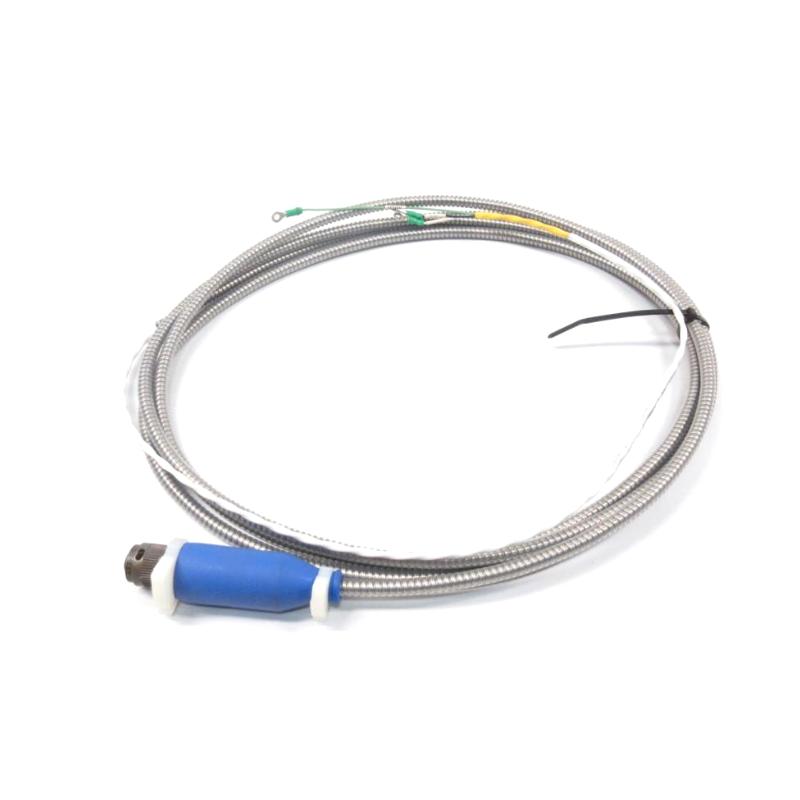
A8: It is best mounted close to the probe or in a controlled enclosure to minimize cable length of raw signal path, reducing noise and interference.
Q9: How long can the output signal cable be?
A9: It depends on system design, but the proximitor module is designed to handle the nominal length implied by “90” with stability. Longer runs may require additional design considerations or amplification.
Q10: What maintenance should be done for this module?
A10: Regular inspection for connector integrity, checking for drift or signal anomalies, and verifying that seals remain intact are all recommended.
Related Products
Copyright @ 2026 Automations
XML|Links:
No:77501