8. FAQs (Q&A Format)
Q1: What is the maximum measurable distance of this probe?
A: The linear measuring range is approximately 0.25 mm to 2.3 mm. Beyond that, the signal may become nonlinear or unreliable.
Q2: What is the recommended gap voltage?
A: A typical recommended gap voltage is around –9 Vdc, corresponding to a 1.27 mm (50 mils) shaft gap.
Q3: How much temperature can it withstand?
A: Standard probe handles up to +177°C. With high-temp options, the tip can withstand +218°C and cables up to +260°C.
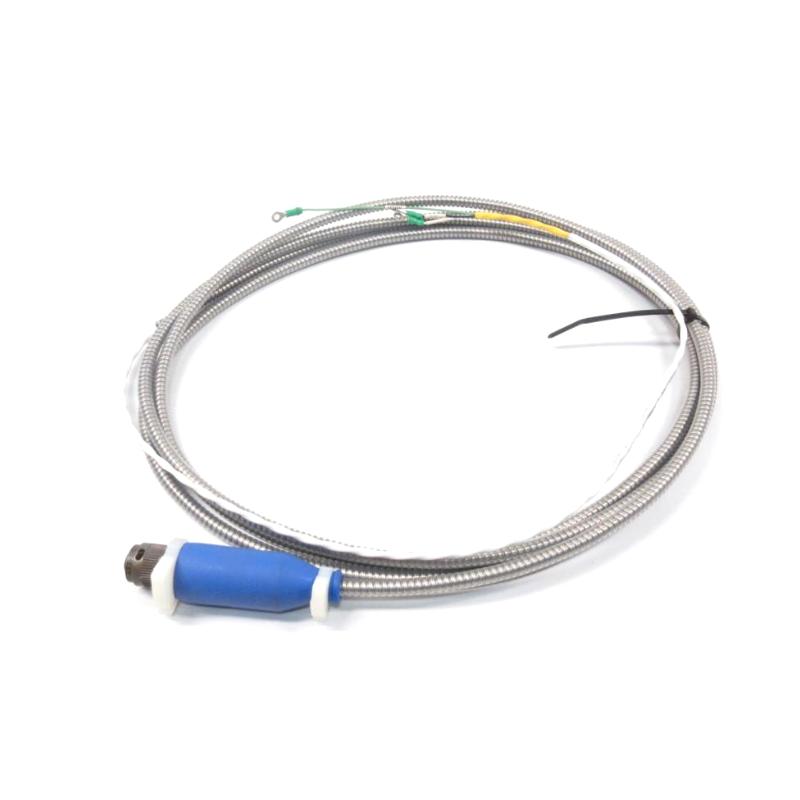
Q4: Does cable capacitance affect signal quality?
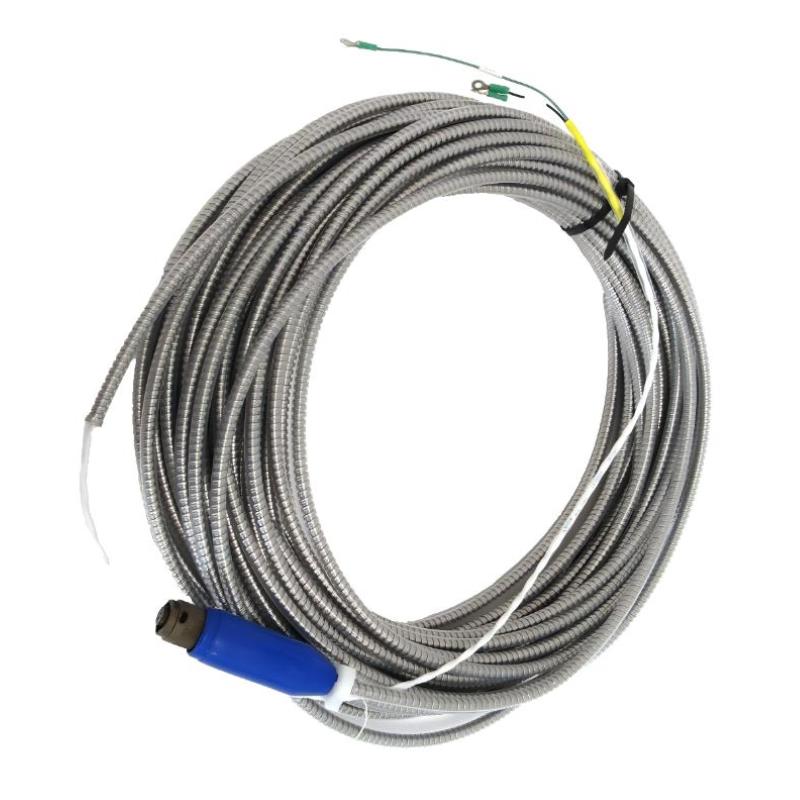
A: Yes. Higher capacitance can reduce signal fidelity. The standard cable has around 69.9 pF/m capacitance.
Q5: Is it easy to replace if the probe fails?
A: Yes. Thanks to modular design, the probe can be replaced separately. Re-calibration of the gap is recommended.
Q6: Can it work in oily or wet conditions?
A: Yes. The probe is sealed and designed for industrial environments. FluidLoc cable options enhance sealing against fluids.
Q7: Is it suitable for high-vibration machines?
A: Absolutely. It is built to endure high-G vibration and shock in turbines and compressors.
Q8: How can I detect a faulty probe?
A: Look for signal drift, noisy outputs, or incorrect gap voltage. Cross-test with a known-good probe if possible.
Q9: Is this model certified for hazardous environments?
A: Yes. The suffix “05” version comes with certifications like ATEX, CSA, and IECEx for hazardous area use.
Q10: Why are there price differences for the same model online?
A: Differences can arise from certification versions, high-temp options, cable/connectors, supplier markup, and whether it’s OEM or aftermarket.
Related Products
Copyright @ 2026 Automations
XML|Links:
No:77501