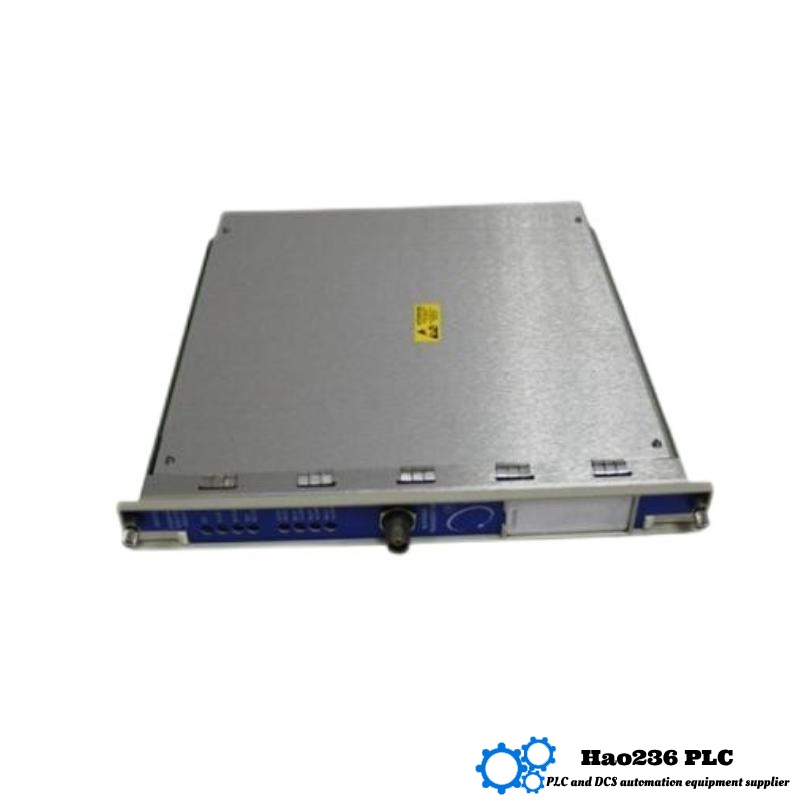
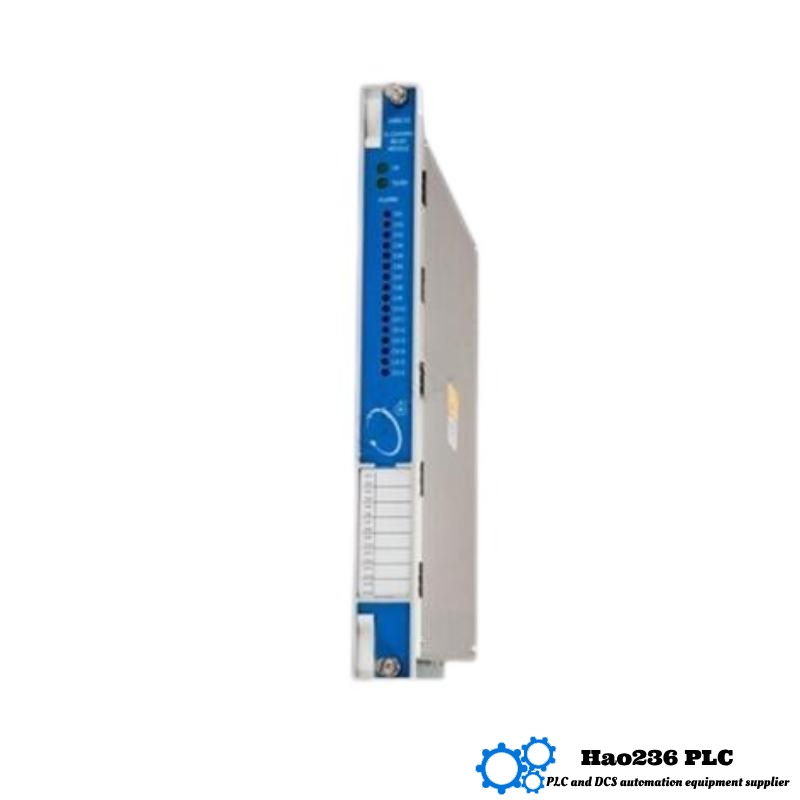
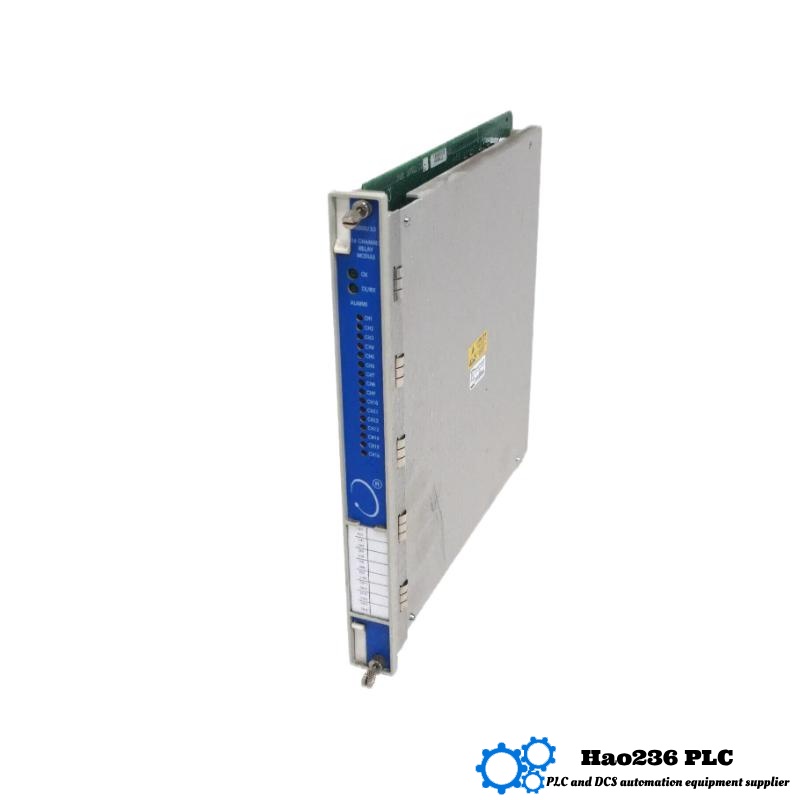
7. Frequently Asked Questions (10 QA)
Below are ten common questions about the 3500/33 162291‑01 relay module, with clear answers reflecting practical use.
Q1: Can the 3500/33 module drive large current loads directly (e.g. motors)?
A1: No. The relay outputs are intended for control or signaling levels. For heavy loads (motors, heaters), use external contactors or drivers behind the relay.
Q2: If one relay channel fails, do the others continue functioning?
A2: Yes—each relay channel is independent. A failure in one channel generally does not disable the others.
Q3: Is the 33 module hot‑swappable?
A3: It is safest to power down the rack before inserting or removing modules. Hot-swap is not recommended unless system design explicitly supports it.
Q4: How is logic programmed into each relay channel?
A4: Logic is configured through the 3500 rack configuration software. For each relay channel, you select alarm inputs, logic (AND/OR/vote), latch modes, etc.
Q5: What is the expected life of the relay contacts?
A5: Under standard conditions, relay contact life is about 10,000 cycles. Actual life depends on load, switching frequency, and environment.
Q6: What is the minimum current the relays can reliably switch?
A6: In standard (silver) contacts, ~100 mA @ 5 VDC. For low-current applications, gold‑plated low-current contacts may support as low as 1 mA @ 1 VDC.
Q7: What environmental conditions can it handle?
A7: Designed for industrial environments: –30°C to +65°C, up to 95% humidity (non-condensing). Sealed relays help resist dust, oil, and other contaminants.
Q8: How can I test whether a relay works?
A8: Use the rack diagnostics software to force an output, observe relay status LED, or measure continuity on the relay terminals while commanding it.
Q9: Can multiple 33 modules be used together in one rack?
A9: Yes. Multiple 3500/33 modules can be installed to expand relay output capacity or implement redundant output schemes.
Q10: Does the 33 module support failsafe operation?
A10: Yes, it supports both normally energized (fail-safe) and normally de-energized configurations depending on system design and logic settings.
Related Products
Copyright @ 2026 Automations
XML|Links:
No:77501