7. FAQ (10 Questions & Answers, QA Format)
Q1: What does 8C‑TPOXA1 do in a control system?
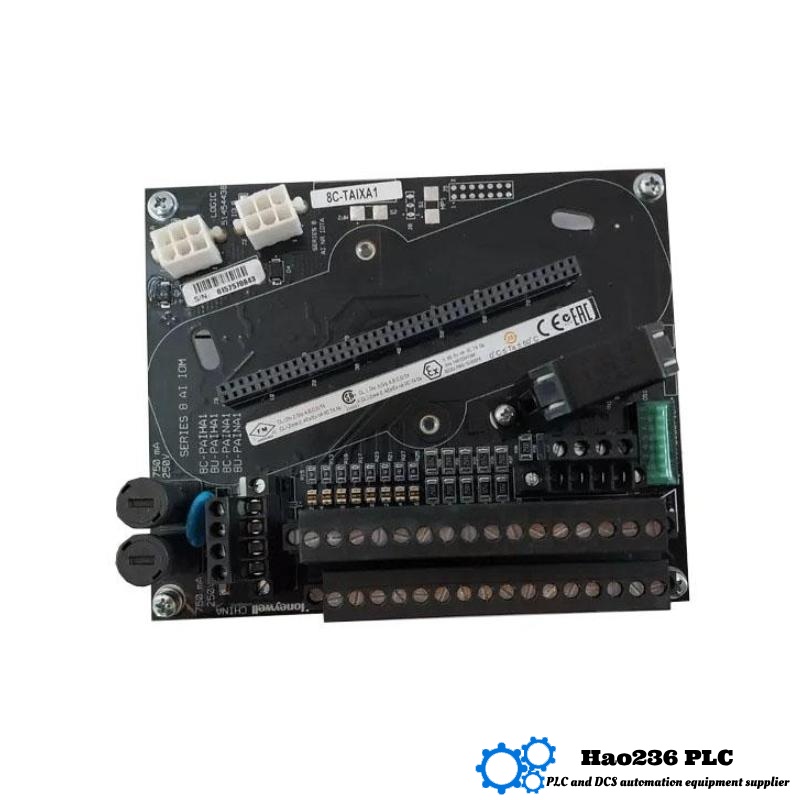
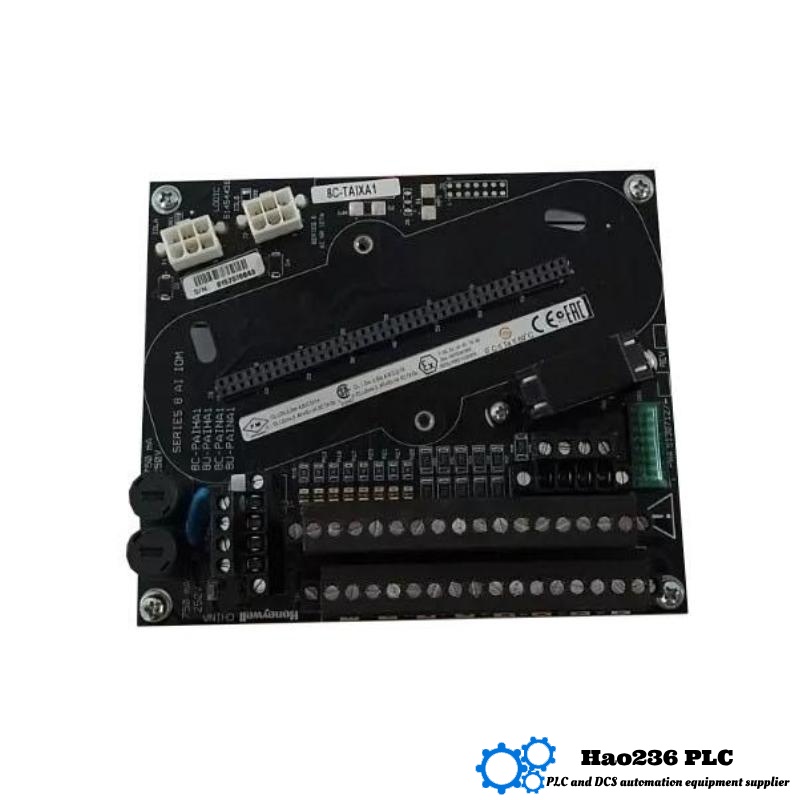
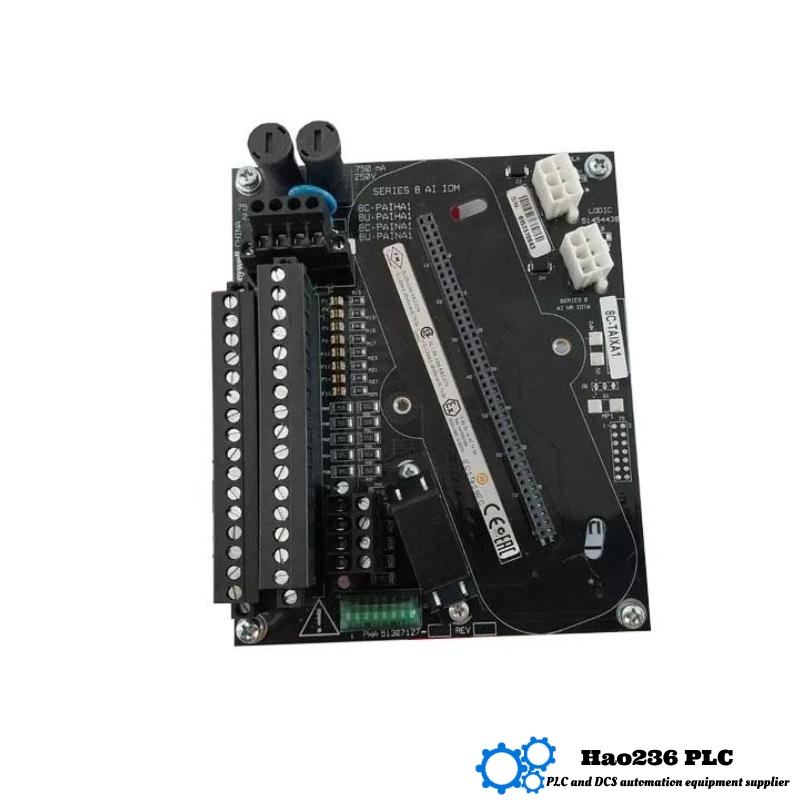
A1: It functions as a terminal interface (I/O assembly) that routes signals between the field and the control modules, providing connectors, synchronization, and grounding in the process.
Q2: Why choose a coated version (8C) instead of uncoated?
A2: The coating gives it protection against moisture, dust, and corrosive environments, improving long-term reliability in harsh industrial plants.
Q3: What is the module’s connector set?
A3: It has FTE A & B (CAT5e) connectors, a DB9F connector (for DP networks), and a CAT5e redundancy sync cable connector.
Q4: Can it be used in redundant I/O paths?
A4: Yes — it supports dual IOTA configurations synchronized via a sync cable for redundancy.
Q5: What are its dimensions and weight?
A5: Roughly 120 mm × 30 mm × 110 mm, weighing about 0.35 kg in common listings.
Q6: What is the operating temperature range?
A6: 0 °C to 60 °C nominal; storage range –40 °C to +85 °C.
Q7: What current does the module draw internally?
A7: Approx. 430 mA for its internal circuits (link side) as commonly listed in spec sheets.
Q8: Does it provide any logic or signal processing?
A8: No — it is a passive terminal interface; it does not convert, filter, or process I/O signals.
Q9: How is it installed or replaced?
A9: It mounts into the I/O rack or mounting scheme and connects to I/O link cables and field wiring. It is modular, so replacement is relatively straightforward.
Q10: What should I check when integrating 8C‑TPOXA1?
A10: Verify connector compatibility, redundancy scheme, I/O link voltage / cable length, environmental protection needs, physical space in rack, and grounding / power distribution.
Related Products
Copyright @ 2026 Automations
XML|Links:
No:77501