7. Frequently Asked Questions (FAQ)
Q1: What does the FSC 10020/1/2 module do in a system?
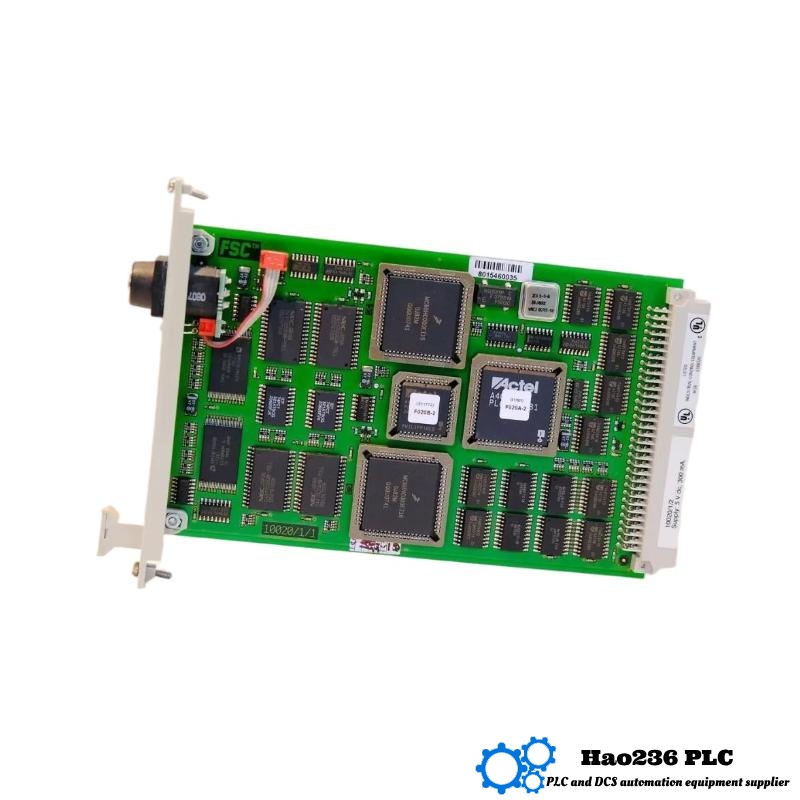
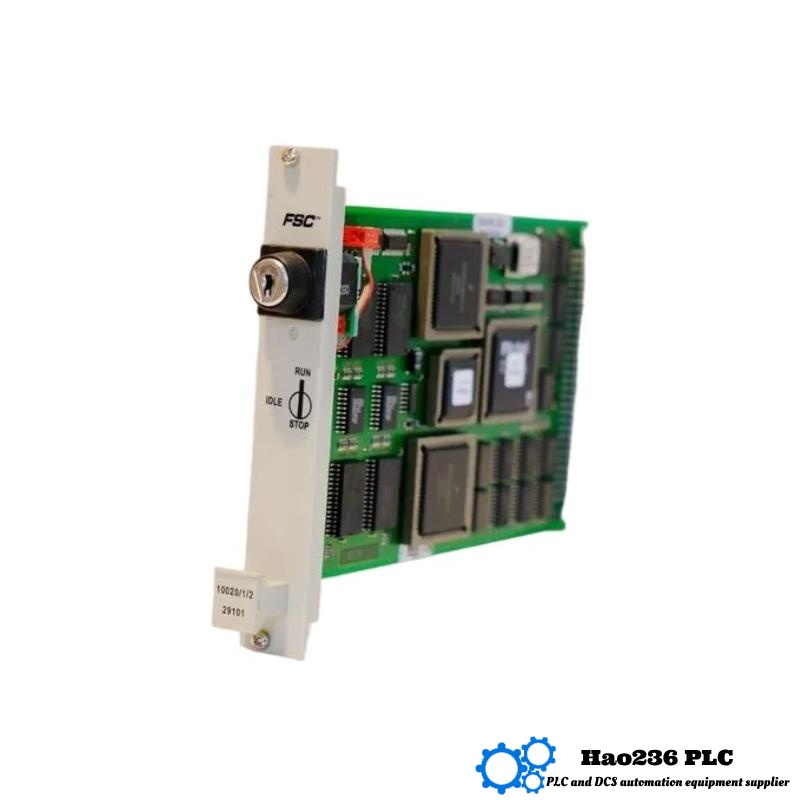
A1: It acts as the main processor in a fail-safe control system, executing safety logic, monitoring system health, and coordinating communication.
Q2: Why are there four processors in this module?
A2: The quad-core architecture allows multiple tasks—logic, diagnostics, data handling—to run simultaneously, improving performance and reliability.
Q3: Can this module be replaced while the system is running?
A3: No, the module should only be replaced during a scheduled maintenance shutdown to ensure system safety and integrity.
Q4: What happens if one processor fails?
A4: The module’s diagnostics will detect the failure and either isolate the fault or shift tasks to the remaining processors, depending on configuration.
Q5: Is it compatible with older FSC modules?
A5: Compatibility depends on the backplane, firmware version, and communication protocols. Always consult system documentation.
Q6: Does the FSC 10020/1/2 need additional cooling?
A6: Under normal conditions, no. Its power consumption is low, and it operates within typical industrial temperatures.
Q7: How can I tell if the module is working properly?
A7: Front-panel LEDs indicate status such as power, communication, fault, or activity.
Q8: Can it log historical fault data?
A8: While the module itself may not store logs, it supports integration with systems that do. Fault data can be transmitted to supervisory systems.
Q9: What are the common failure signs of this module?
A9: Indicators include communication loss, processor watchdog timeout, abnormal LED signals, or system faults reported from supervisory layers.
Q10: How do I install the FSC 10020/1/2 module?
A10: Slide it into the correct slot in the FSC rack, ensure secure connection to the backplane, and verify via LED diagnostics and software recognition.
Related Products
Copyright @ 2026 Automations
XML|Links:
No:77501