FAQ (10 Questions & Answers)
Q1: What is the primary role of the IS220PPROH1A?
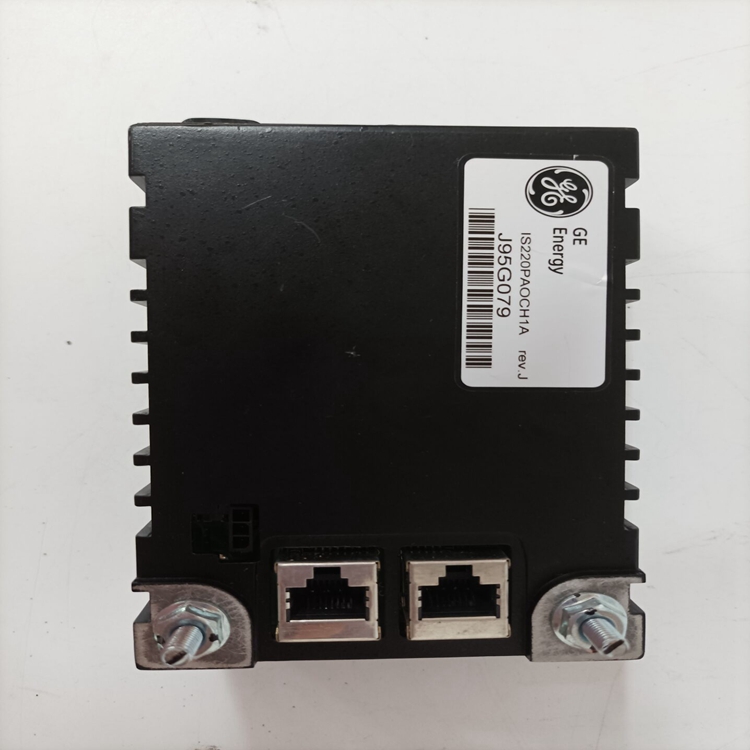
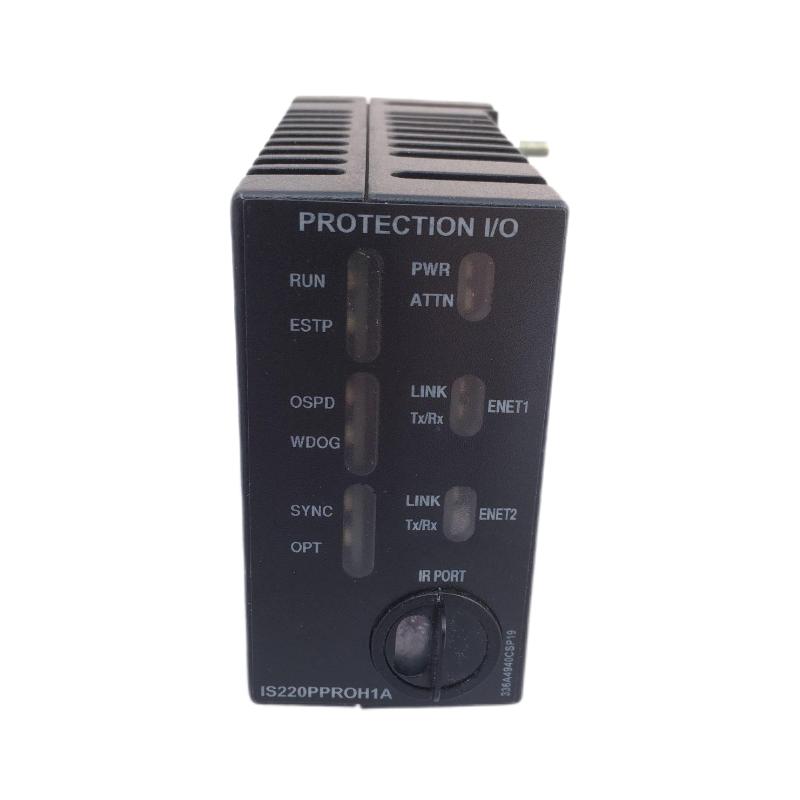
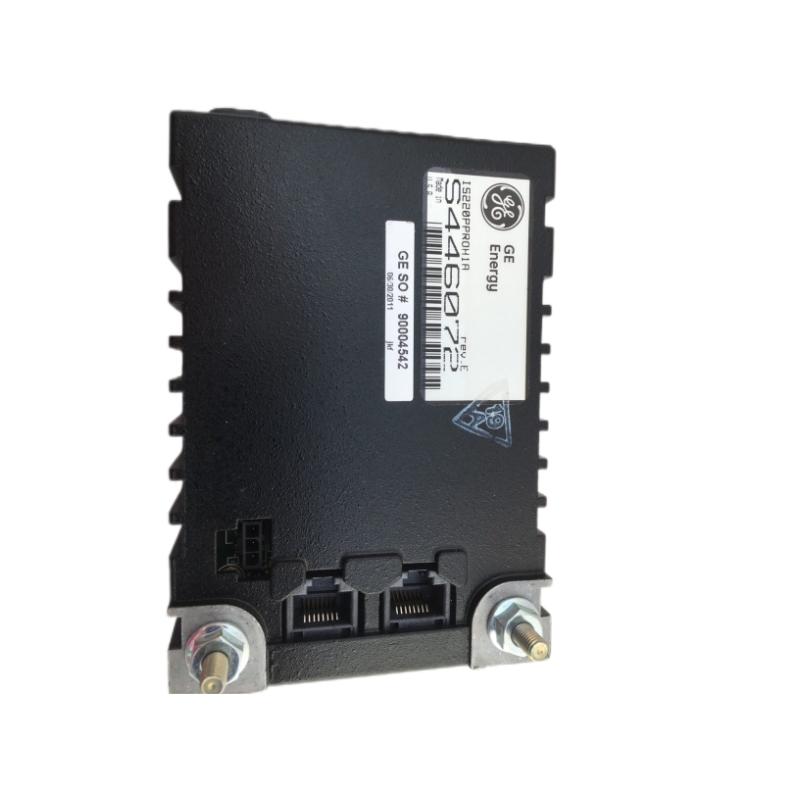
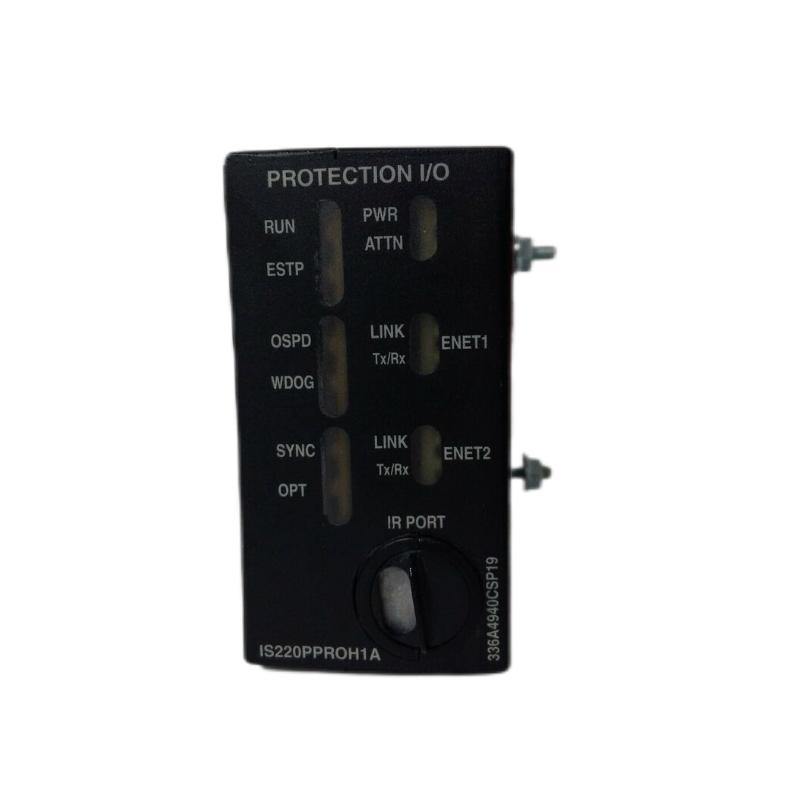
A1: Its main role is to serve as a backup protection I/O pack module for turbine emergency trip systems — providing independent hardware logic, turbine overspeed protection and generator synchronization monitoring.
Q2: What supply voltage does this module use?
A2: It uses a nominal supply voltage of 24 V DC, with an operating input range approximately between 12 V and 24 V DC.
Q3: What is its size and weight?
A3: The module’s dimensions are approximately 222 mm × 144 mm × 88 mm and its weight is about 2.5 kg.
Q4: What temperature range can the module operate in?
A4: It is rated for a wide operating temperature range from –40 °C up to +85 °C, making it suitable for harsh environments.
Q5: How many Ethernet ports does it provide?
A5: It includes two Ethernet 10/100 Mbps ports, enabling network redundancy or dual-path communication.
Q6: Can this module be used in redundancy architectures?
A6: Yes — it supports TMR (Triple Modular Redundant) architectures and is designed for use in protection systems requiring fault tolerance.
Q7: In what industries is this module typically used?
A7: It is commonly used in turbine control systems (gas/steam), power generation, oil & gas platforms, and other critical industrial automation environments where emergency protection is required.
Q8: Does the module require additional separate trip boards?
A8: Yes — it interfaces with dedicated trip boards (such as TREG, TREL, TRES, TREA) to effect emergency trips, overspeed shutdowns and other protection logic.
Q9: What are the wiring or installation considerations?
A9: Because of its protection application, wiring must respect field wiring limits (e.g., 18 AWG cable length restrictions) and proper grounding, and the module should be installed in a cabinet with appropriate ventilation and mounting.
Q10: How does this module improve system reliability?
A10: By providing a dedicated backup protection path separate from the main control system, with hardware redundancy, dual communications paths, and high-quality build, it ensures that protection functions remain available even when the primary control path fails.
Related Products
Copyright @ 2026 Automations
XML|Links:
No:77501